Burn Injury Simulation Training: Why TraumaSim Developed a Progressive Burns Range
By Belinda Rennie | Operations Manager, TraumaSim
Burn injuries are among the most challenging and confronting medical emergencies responders can face. From initial assessment and pain management to airway concerns, infection risk, and fluid resuscitation, burn care requires fast decision-making under pressure and a high level of clinical confidence.
Yet despite the complexity of burn injuries, many traditional training environments still rely on static visuals, textbook learning, or low-fidelity simulation that fails to reflect how burns truly present and evolve in real-life scenarios.
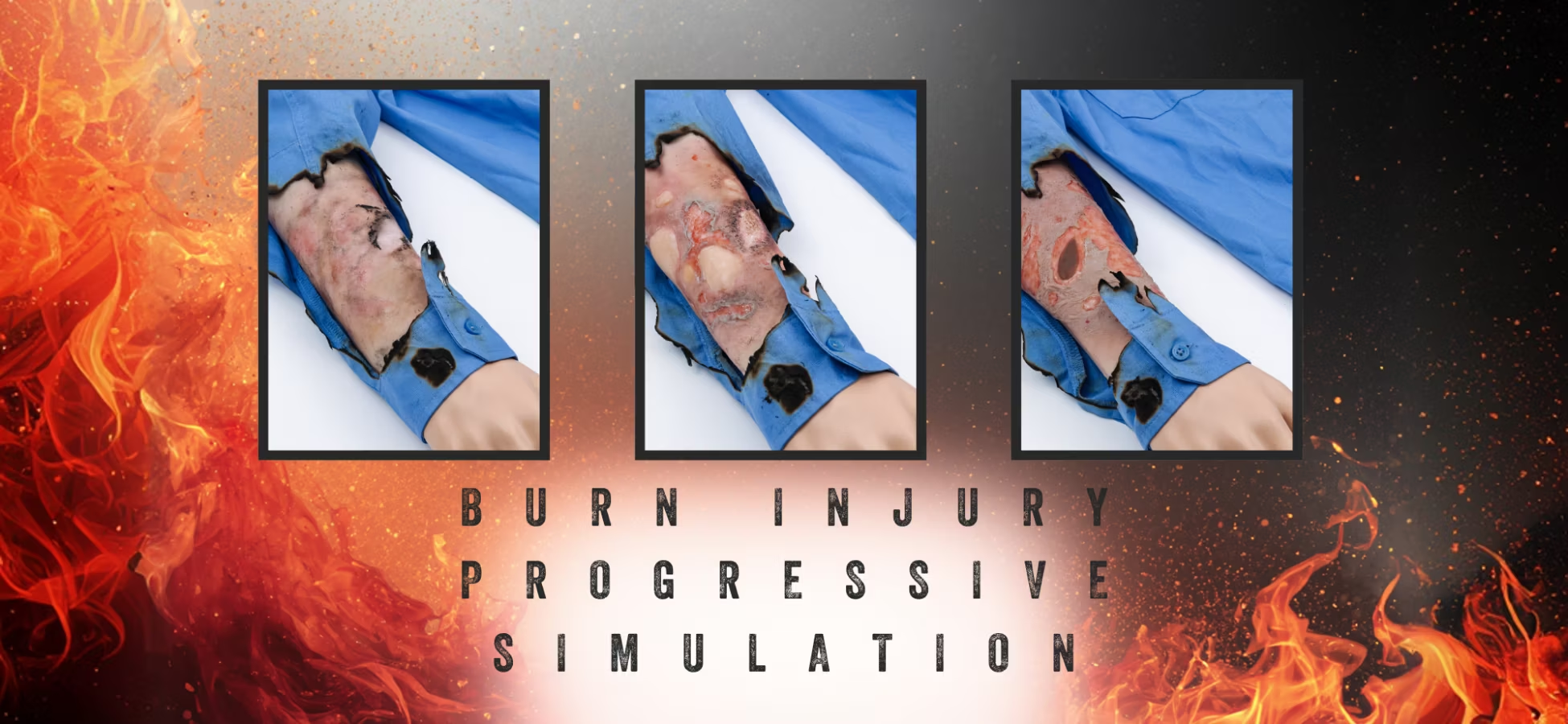
That gap in realism is exactly why TraumaSim developed the Progressive Burns Range.
Share this Article:
The Challenge with Traditional Burn Training
Burn injuries are dynamic. They change over time, vary in severity, and can quickly impact multiple systems within the body. For emergency responders, military medics, healthcare professionals, and training organisations, recognising these changes early is critical.
Traditional simulation methods often struggle to recreate:
Different burn depths and severities
The progression of burns over time
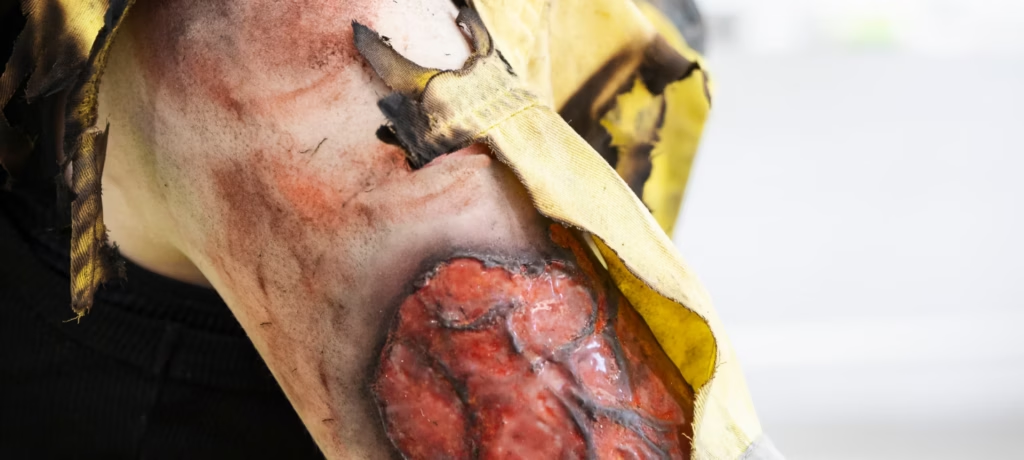
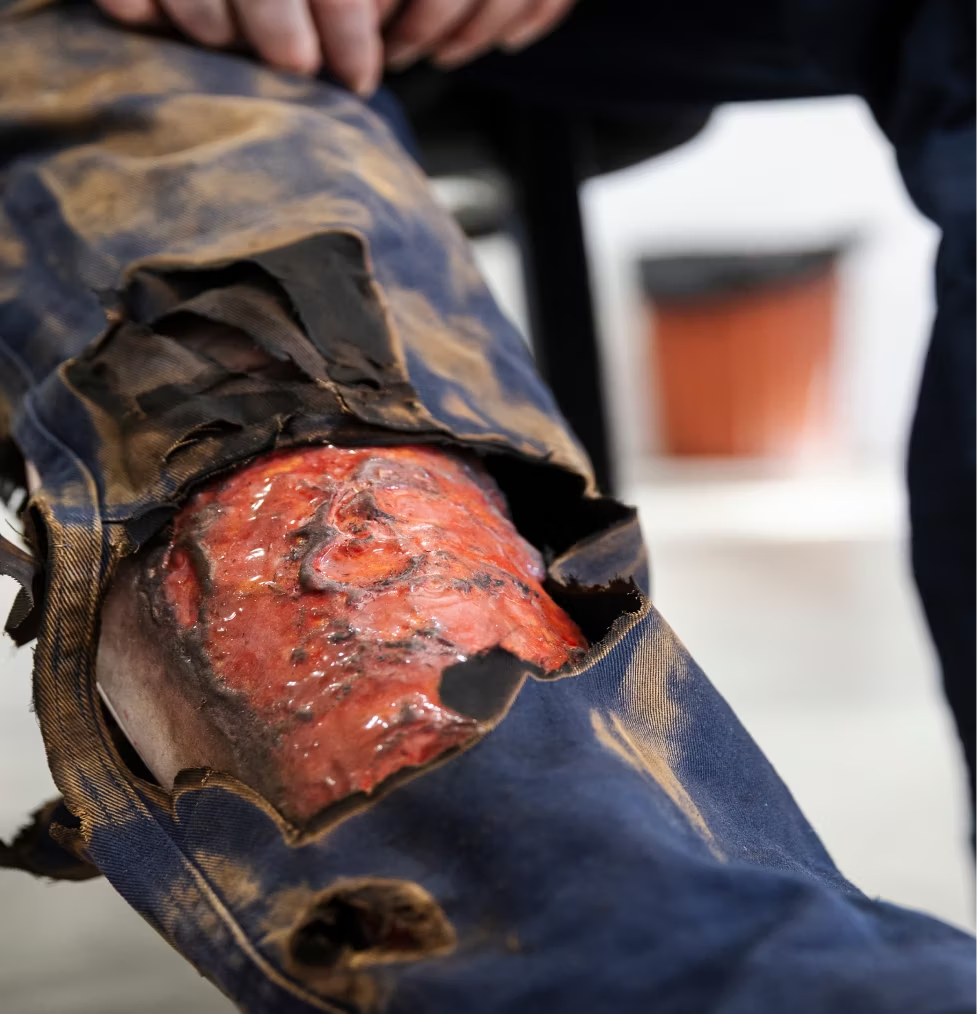
Realistic textures and visual presentation
Multi-patient or mass casualty scenarios
The emotional pressure associated with severe trauma cases
Without realistic exposure, learners may understand burn treatment in theory but lack the practical confidence needed in high-pressure situations.
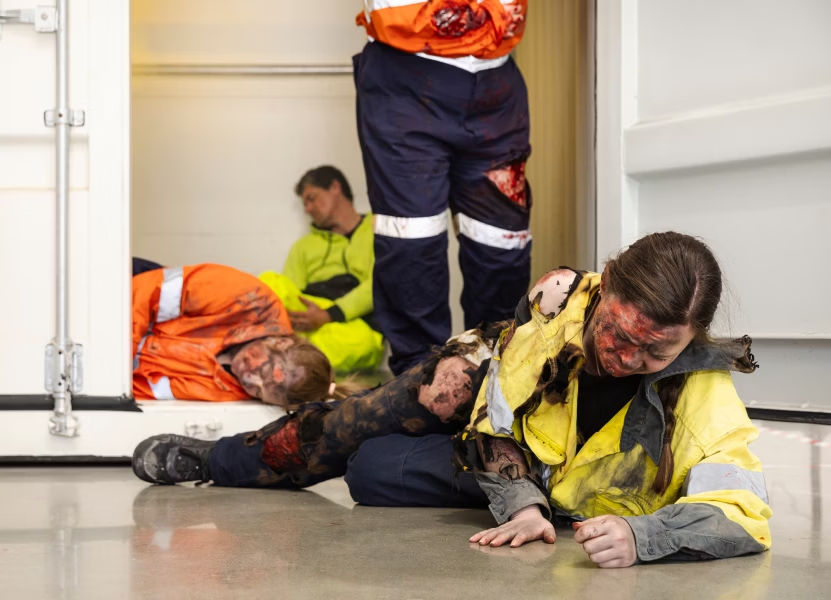
Burn wound real world simulation
Building More Realistic Burn Simulation
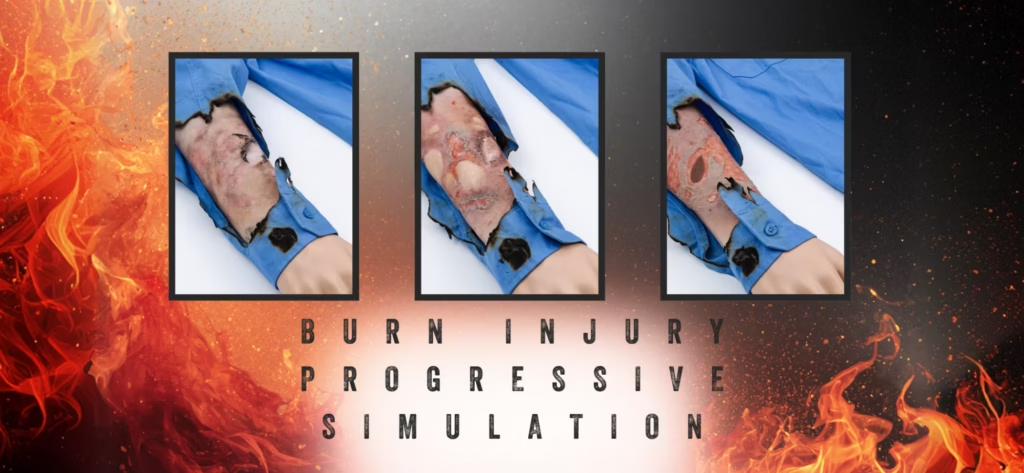
TraumaSim’s Progressive Burns Range was developed to create a more immersive and clinically relevant approach to burn injury training. The range is designed to help organisations simulate the visual progression and complexity of burns in a way that improves engagement, realism, and practical learning outcomes.
By combining high-fidelity detailing with wearable and scenario-based applications, the range supports:
Emergency response exercises
Military and tactical medicine training
Hospital and clinical education
Mass casualty simulation scenarios
First aid and industrial safety programs
The goal is simple: create training that better prepares teams for the realities of burn injury response.
Why Realism Matters in Trauma Training
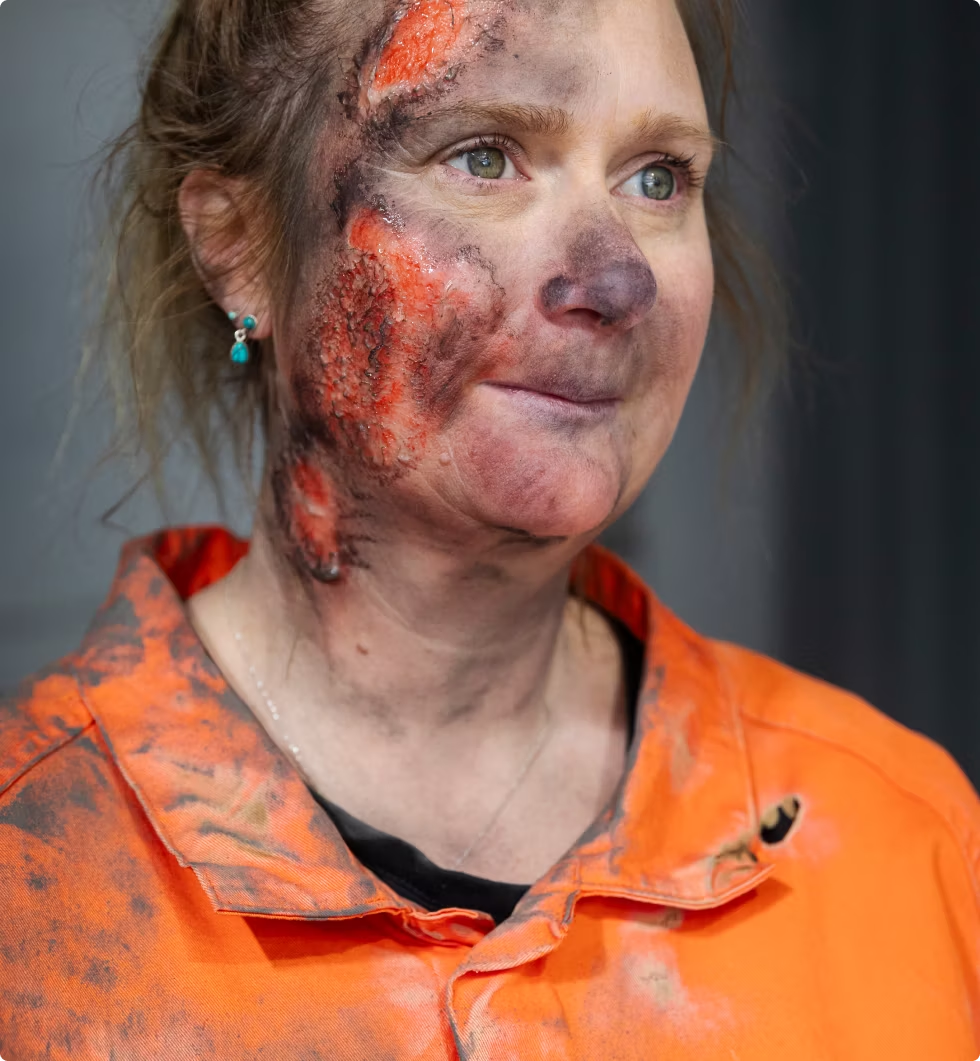
Realistic burn simulations
Why Realism Matters in Trauma Training
High-pressure environments demand more than theoretical knowledge. Responders must make rapid decisions, communicate effectively, and stay composed while managing complex injuries.
Realistic simulation helps bridge the gap between classroom learning and field performance by creating:
Stronger learner engagement
Better knowledge retention
Increased confidence under pressure
Improved assessment and decision-making skills
More immersive scenario participation
For burn injury training specifically, visual realism can significantly improve how learners identify severity, prioritise treatment, and respond to evolving patient conditions.
Supporting Better Training Outcomes
TraumaSim continues to work alongside defence, healthcare, emergency response, and training organisations to develop simulation products that reflect the realities of emergency care. The Progressive Burns Range forms part of a broader commitment to improving realism in trauma education and helping teams prepare for situations where every decision matters.
As simulation training continues to evolve, realistic and adaptable tools will play an increasingly important role in preparing responders for the complexity of real-world emergencies.
Founder’s Feature: Nola Pearce From St John Cadet to the Founder of TraumaSim TraumaSim founder Nola Pearce didn’t begin her journey with a business plan or a product idea. It began decades earlier, with a teenager in Adelaide who wanted to help people and learn how to save lives. That curiosity — sparked in the […]
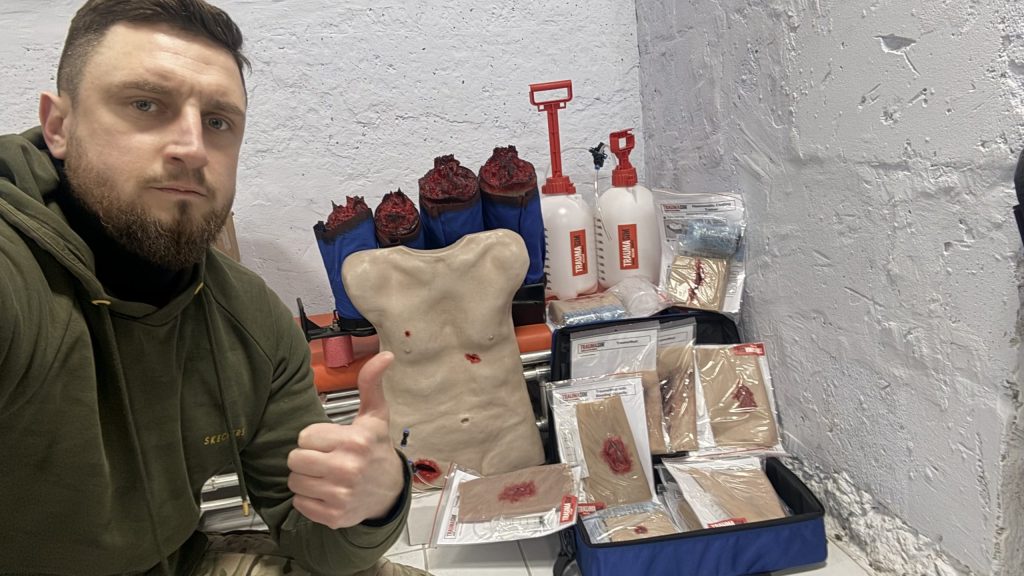
Haemorrhage Control Training Ukraine: Realism That Saves Lives At TraumaSim, our mission is to equip responders with realistic training tools that save lives. Sometimes, fulfilling this mission takes us beyond our labs and offices into experiences that are challenging, humbling, and deeply rewarding. Our recent work supporting haemorrhage control training in Ukraine is a perfect […]
Healthcare Simulation Week 2025 is here—celebrated globally from September 15–19 under the theme United Through Simulation. This week honors the incredible community of professionals who use simulation to improve the safety, effectiveness, and efficiency of healthcare for all. At TraumaSim, we’re proud to be part of this movement. Our mission is to create hyper-realistic simulation products that empower healthcare professionals […]
In 2020, TraumaSim launched the Manniskin—a groundbreaking, silicone overlay designed to convert the traditionally male-featured CPR manikin into a realistic female form. This launch coincided with Restart a Heart Day, a global initiative aimed at raising awareness around sudden cardiac arrest (SCA) and the importance of bystander CPR and AED use. Our motivation was simple: people don’t […]
The Importance of Realistic Training in Combat and Medic Scenarios: Current Warfare vs. Historic Warfare Warfare has evolved, and with it, the challenges faced by medics on the battlefield. Today’s combat zones require more than previously taught—they demand targeted training to handle the complex and devastating wounds that are often encountered in peer or near-peer […]
The development of our Life Cast Arm Haemorrhage Control Simulator (HCS)
By Belinda Rennie | Operations Manager, TraumaSim
Share this Article:
So, what is it and what does it do?
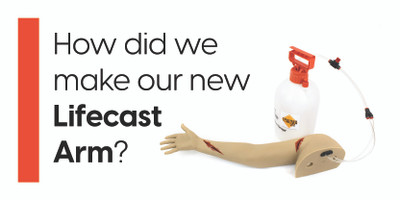
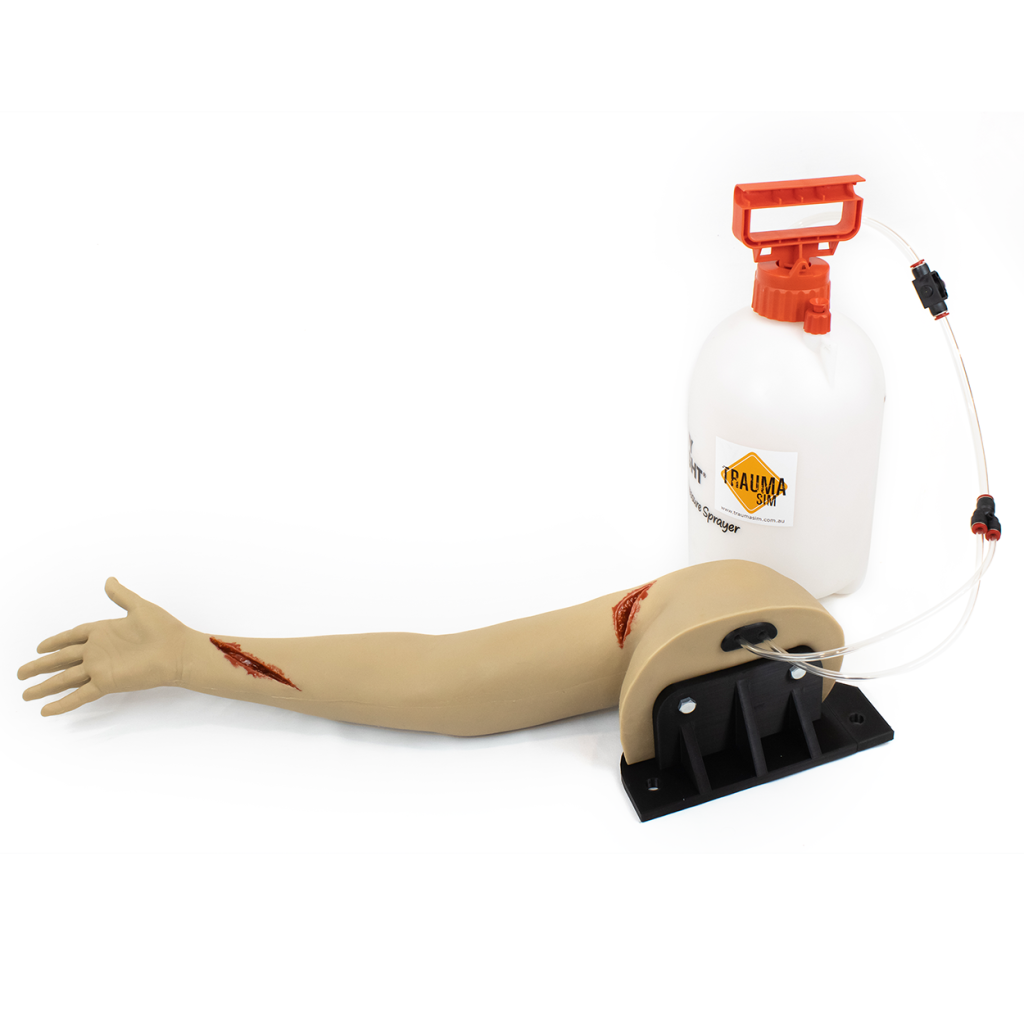
In 2021, the team at TraumaSim Group took on the challenge to design & manufacture a brand new Haemorrhage Control Simulator as a lifecast arm. We combined our knowledge of haemorrhage control and silicone artistry and are proud to have developed a product that reflects the medical realism we are known for.
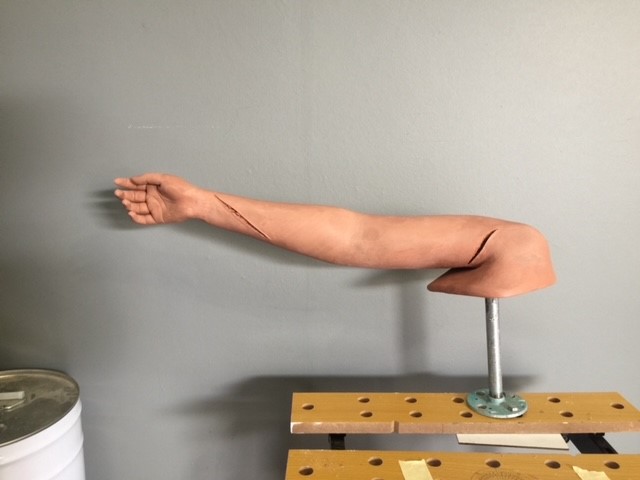
The Lifecast Arm features 2 x wounds being a junctional laceration near the armpit that is ideal for wound packing and a laceration across the radial artery on the wrist that can be used for tourniquet application – being the ideal combined unit for bleeding control training!
Wound packing and applying a tourniquet to an injured person are both physically and mentally traumatic for any First Responder. Knowing that they are inflicting further pain on the casualty in order to save their life can make application in a real life situation extremely difficult. Hence the haemorrhage control simulator that enables students to practise repeatedly in a safe environment.
This device also teaches first aiders that, in order to save a life, two visually similar wounds must be treated differently depending on where they are placed on the body. When a tourniquet is applied correctly to the arm, the flexible plumbing within the silicone skin will restrict blood flow and stop the bleed of the forearm laceration. The laceration to the upper arm however is purposefully placed so that a tourniquet will not restrict blood flow. In this instance, the first aider must use wound packing techniques to stop the bleed.
This product can be clamped or bolted to a table, with controlled blood flow connected to a 5L reservoir. The two bleeding wounds can be operated independently or together, allowing the user to place themselves in differing hypothetical emergency situations. If the casualty is bleeding from both wounds, which would the user treat first?
Medical grade silicone is used in the arm to provide a realistic human flesh look and feel, and is strong enough to demonstrate the realistic amount of physical force required to effectively apply a tourniquet, or the pressure required to pack the wound and stop a heavy bleed. See video below:
How does the arm differ from our other products?
TraumaSim Group have a varied range of haemorrhage control simulators as well as haemostatic clotting trainers that will assist any trainer looking to teach the Advanced First Aid curriculum. The use of these training aids comply with national standards as defined by the Australia Resuscitation Council (ARC) and Australia Skills Quality Authority (ASQA).
A portion of our more visually graphic products, such as the severed limb Emergency Tourniquet Trainer, have been developed in conjunction with the Australian Defence Force and other tactical based Emergency Response teams. Taking a different approach, the Lifecast Arm, moulded from one of our very own staff, presents a more realistic simulator for general businesses and the public.
Differing from our Emergency Tourniquet Trainer, this unit highlights that tourniquets are not only effective for amputations but can also be applied to mitigate any major blood loss to a haemorrhaging limb. This type of first aid response for an arterial bleed has been trialled and tested over many years, and current research shows that it is the most effective approach to stop the bleed when packing is not enough.
How was the arm developed and what challenges did we face?
The development of the life cast arm began as an idea – to produce a more anatomically realistic haemorrhage control simulator that teaches first aiders to mitigate heavy bleeding using correct tourniquet application and wound packing techniques. We conceptualised an arm with two deep lacerations – one bleeding wound in the forearm that can be stopped with a tourniquet and a second bleeding wound placed near the armpit that can be stopped with wound packing techniques.
In order to create a foolproof product, many hours were devoted to planning the inner mechanics of the arm and extensive testing was required to ensure it functioned correctly. Before beginning construction, we drafted a 37-page development plan!
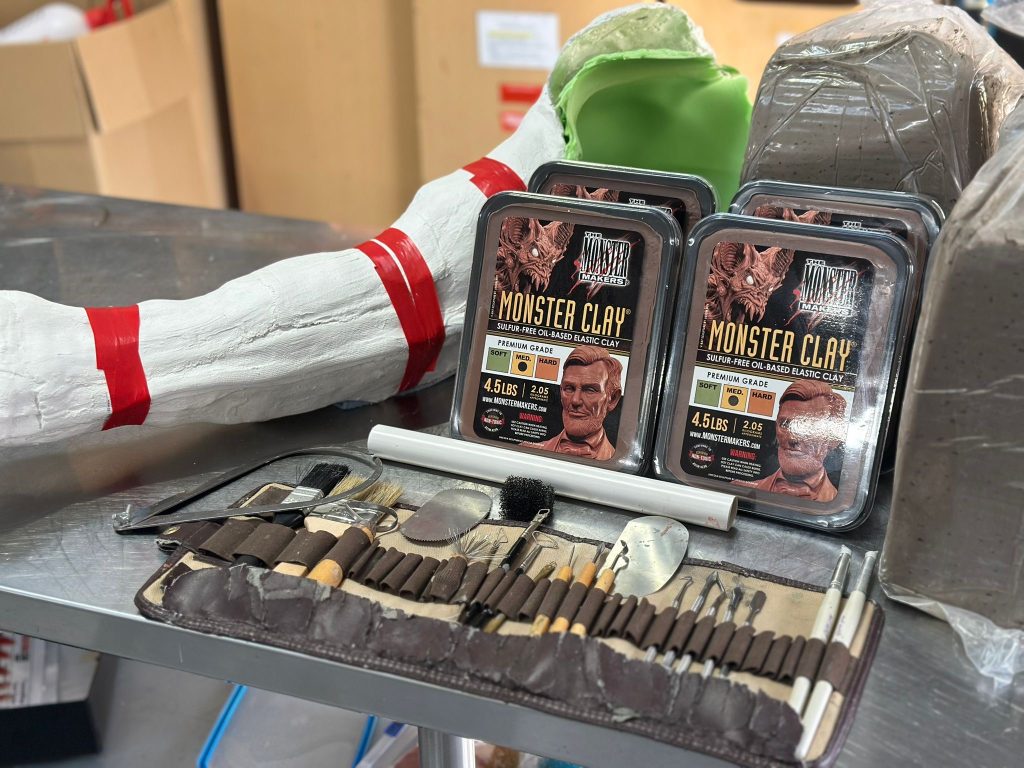
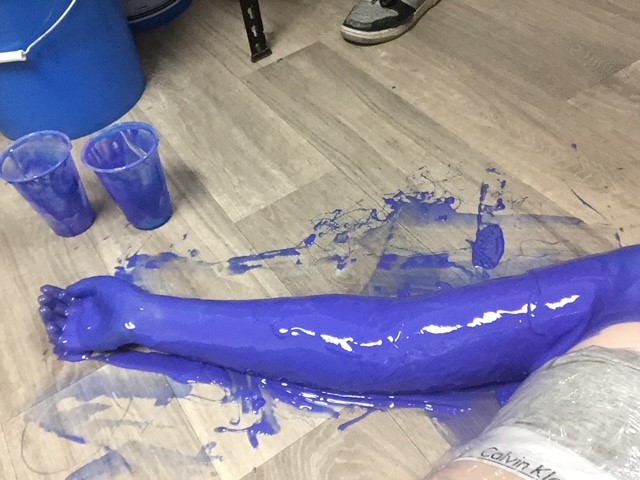
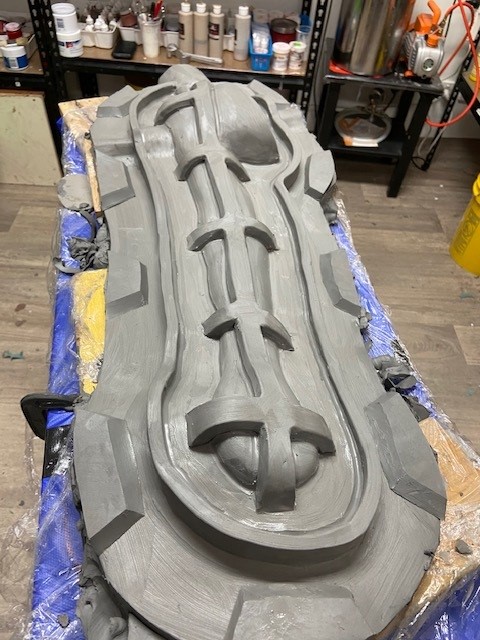
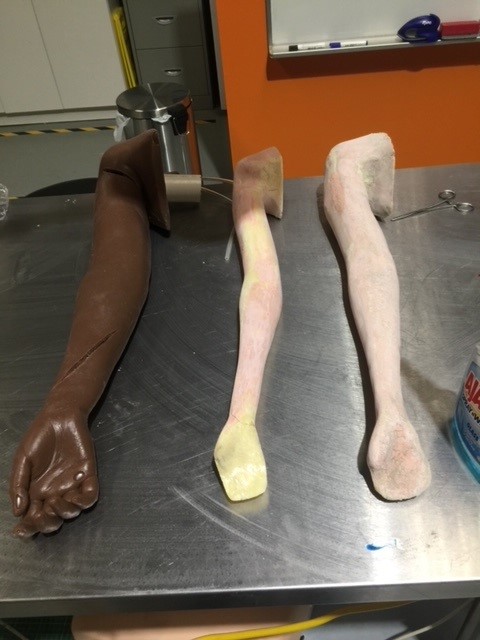
The construction process begins with a life cast, made using silicone and plaster bandage. We then filled this life cast with a liquified oil-based clay and demoulded it once it had cooled. The two wounds were sculpted into this solid clay arm and that became the shape that you see in our product.
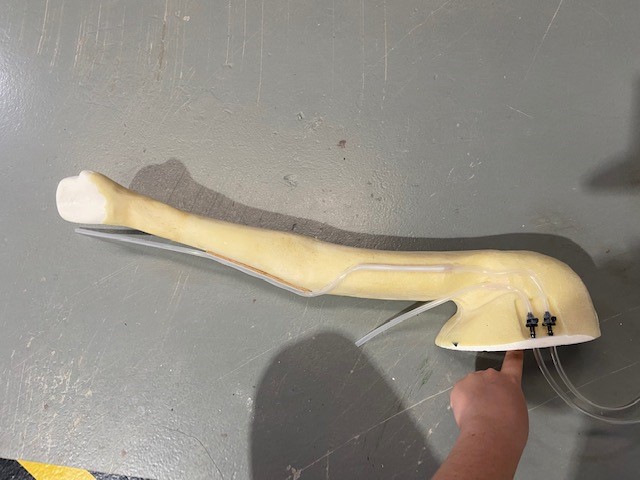
A 3-part fiberglass mould later, and we had the outer shell of the mould. The most complicated part of the process for this kind of product, is working backwards to develop the inner core of the product. We used our outer mould of the arm to measure inwards an even thickness on all sides, that would become the “skin”. Using these measurements, we were able to create a solid inner core that acts as the “bones” of the arm and can withstand the strength of a RAT and CAT tourniquet
Here is where the trouble shooting comes in. Product development always has complications, and we had a few challenges to face. How do we replicate the exact density of human skin, so that the tourniquet stops blood flow with the right amount of pressure? How do we make the arm easy to use? How do we make the arm strong enough to avoid breakage under pressure?
It took two full runs of the product development from life casting to pouring in order to smooth out all the kinks in the process. Trial and error is the key to success, and with a fair few errors we have created the life cast arm haemorrhage control simulator, ta-da!
As with all of our products, this Lifecast Arm is available in 11 x different skin pigments truly allowing diversity in your simulation training. For more information on this unit, check it out in our store (HCS01 Lifecast Arm) or contact the team today on 1300 411 080 or via [email protected].
Burn injuries are dynamic, complex and time-sensitive. Yet for years, many training tools have presented them as static wounds, limiting a responder’s ability to recognise deterioration, anticipate complications and manage care over time.
Founder’s Feature: Nola Pearce From St John Cadet to the Founder of TraumaSim TraumaSim founder Nola Pearce didn’t begin her journey with a business plan or a product idea. It began decades earlier, with a teenager in Adelaide who wanted to help people and learn how to save lives. That curiosity — sparked in the […]
Haemorrhage Control Training Ukraine: Realism That Saves Lives At TraumaSim, our mission is to equip responders with realistic training tools that save lives. Sometimes, fulfilling this mission takes us beyond our labs and offices into experiences that are challenging, humbling, and deeply rewarding. Our recent work supporting haemorrhage control training in Ukraine is a perfect […]
Healthcare Simulation Week 2025 is here—celebrated globally from September 15–19 under the theme United Through Simulation. This week honors the incredible community of professionals who use simulation to improve the safety, effectiveness, and efficiency of healthcare for all. At TraumaSim, we’re proud to be part of this movement. Our mission is to create hyper-realistic simulation products that empower healthcare professionals […]
In 2020, TraumaSim launched the Manniskin—a groundbreaking, silicone overlay designed to convert the traditionally male-featured CPR manikin into a realistic female form. This launch coincided with Restart a Heart Day, a global initiative aimed at raising awareness around sudden cardiac arrest (SCA) and the importance of bystander CPR and AED use. Our motivation was simple: people don’t […]



 All Products