September 15, 2025
Simulation Training & Education
United Through Simulation: Why TraumaSim Chooses Lifecasting vs Sculpting
By Belinda Rennie | Operations Manager, TraumaSim
Share this Article:
Healthcare Simulation Week 2025 is here—celebrated globally from September 15–19 under the theme United Through Simulation. This week honors the incredible community of professionals who use simulation to improve the safety, effectiveness, and efficiency of healthcare for all.
At TraumaSim, we’re proud to be part of this movement. Our mission is to create hyper-realistic simulation products that empower healthcare professionals to train with confidence and compassion. Behind every wound, limb, and trauma model lies a creative decision: should we lifecast from a real human body, or sculpt from scratch?
Let’s explore why we choose one method over the other—and how both contribute to the realism and impact of simulation-based education.
Lifecasting: Capturing the Human Experience
Lifecasting involves creating a mold directly from a human body. This technique allows us to replicate:
Skin pores, wrinkles, and natural asymmetries
Veins, scars, and subtle textures
The visual realism of aged skin, joint contours, and muscle tone
Lifecasting is ideal for high-fidelity simulations where authenticity matters most—such as replicating the look and feel of real limbs, hands, and faces used in emergency response, aged care, and clinical training environments.
Sculpting: Designing for Purpose and Flexibility
Sculpting is a manual or digital process where our artists build forms from scratch. It offers:
Creative freedom to design conceptual injuries
Flexibility to represent a range of conditions or demographics
Scalability for different training scenarios
Sculpting is perfect when we need to customize features, exaggerate injuries for clarity, or create composite anatomy that doesn’t exist naturally.
Why We Choose One Over the Other
Lifecasting: Pros & Cons
Pros:
✅ Unmatched realism
✅ Efficient capture of surface detail
✅ Anatomical consistency across products
Cons:
❌ Limited flexibility (bound by the subject’s anatomy)
❌ Requires live models and ethical protocols
❌ Post-processing often needed
Sculpting: Pros & Cons
Pros:
✅ Creative control and adaptability
✅ Scalable across ages, ethnicities, and conditions
✅ No live model required
Cons:
❌ Time-intensive
❌ May lack the organic imperfections of lifecasting
United Through Simulation—And Through Craftsmanship
As we celebrate Healthcare Simulation Week 2025, we recognize the artistry, science, and empathy that go into every TraumaSim product. Whether lifecasting a hand to show the mottling of shock or sculpting a compound fracture for battlefield training, our goal remains the same: to create tools that help save lives.
Since its inception in 2017, Healthcare Simulation Week has grown into a unifying moment for the international simulation community. It’s a time to spotlight innovation, collaboration, and the impact of simulation in clinical learning and patient outcomes.
At TraumaSim, we don’t just make models.
We make moments—moments that prepare, educate, and empower.
Burn injuries are dynamic, complex and time-sensitive. Yet for years, many training tools have presented them as static wounds, limiting a responder’s ability to recognise deterioration, anticipate complications and manage care over time.
Burn Injury Training | Clinical Simulation | Emergency Response Why TraumaSim Developed a New Progressive Burns Range Through Innovation and Clinical Partnership By Belinda Rennie | Operations Manager, TraumaSim First published in the Asia Pacific Fire magazine, part of the MDM Fire Publishing Group, www.mdmpublishing.com Download the Full Article (PDF) Read the Original Magazine Version […]
Founder’s Feature: Nola Pearce From St John Cadet to the Founder of TraumaSim TraumaSim founder Nola Pearce didn’t begin her journey with a business plan or a product idea. It began decades earlier, with a teenager in Adelaide who wanted to help people and learn how to save lives. That curiosity — sparked in the […]
Haemorrhage Control Training Ukraine: Realism That Saves Lives At TraumaSim, our mission is to equip responders with realistic training tools that save lives. Sometimes, fulfilling this mission takes us beyond our labs and offices into experiences that are challenging, humbling, and deeply rewarding. Our recent work supporting haemorrhage control training in Ukraine is a perfect […]
In 2020, TraumaSim launched the Manniskin—a groundbreaking, silicone overlay designed to convert the traditionally male-featured CPR manikin into a realistic female form. This launch coincided with Restart a Heart Day, a global initiative aimed at raising awareness around sudden cardiac arrest (SCA) and the importance of bystander CPR and AED use. Our motivation was simple: people don’t […]
Have We Really Moved the Needle? Gender Equity in CPR Training Years After Manniskin
By Belinda Rennie | Operations Manager, TraumaSim
Share this Article:
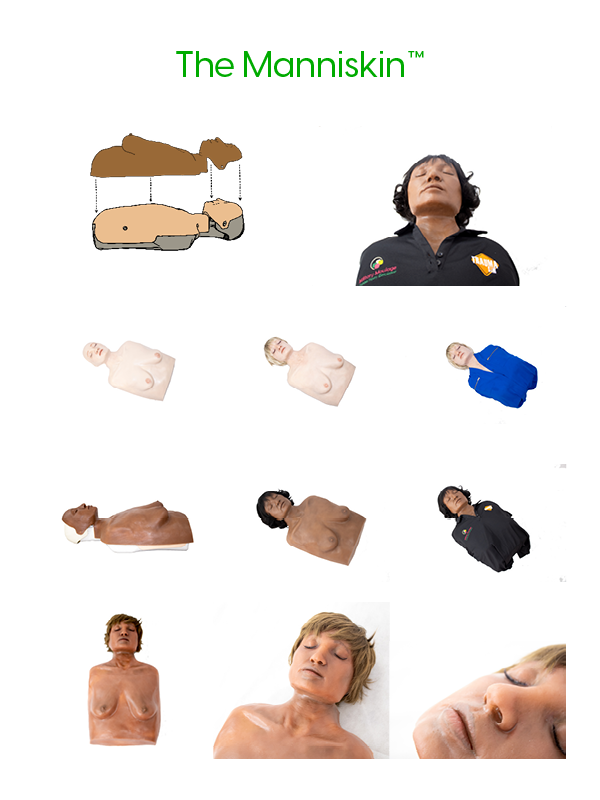
In 2020, TraumaSim launched the Manniskin—a groundbreaking, silicone overlay designed to convert the traditionally male-featured CPR manikin into a realistic female form. This launch coincided with Restart a Heart Day, a global initiative aimed at raising awareness around sudden cardiac arrest (SCA) and the importance of bystander CPR and AED use.
Our motivation was simple: people don’t save lives if they’re not prepared, and people aren’t prepared if they’re never trained to recognise or respond to cardiac arrest in a woman.
Back then, we were responding to some truly confronting statistics:
Over 30,000 Australians suffer cardiac arrest each year, and only 1 in 10 survive.
Studies from the US and Europe revealed that only 39% of women receive bystander CPR, compared to 45% of men.
Researchers concluded that one of the barriers was discomfort: people hesitate to touch or apply chest compressions to a woman, fearing inappropriate contact or being unsure of correct hand placement.
We asked ourselves: How can we expect someone to confidently act in a real emergency if they’ve never seen or practiced CPR on a body that looks like a woman’s?
A female-presenting, high-fidelity silicone skin—complete with breasts, realistic facial detail, lashes, hair, and pigment variation—designed to fit existing CPR manikins like Little Anne. Within seconds, a traditionally gender-neutral training session could now reflect the very real diversity of people who collapse in our streets, homes, and workplaces.
Our goal wasn’t shock—it was representation, empathy, and preparedness. Because cardiac arrest doesn’t discriminate by gender, but it seems bystander action still does.
How Has It Been Received?
Now, years later, we reflect: has anything changed?
The answer is complex.
Some trainers have embraced the Manniskin with genuine passion. They tell us how students take the training more seriously. They talk about breakthroughs in classroom conversations—questions about bias, about assumptions, and about real-world scenarios. They say it’s helped them train with empathy, challenge discomfort, and prepare students better for saving lives.
But there’s also been pushback. And it’s worth examining.
We’ve heard that:
“It’s too realistic.”
“The breasts don’t fall naturally to the side.”
“It’s too confronting to use in public courses.”
“Young male students will laugh or make jokes.”
“Gender doesn’t need to be shown in CPR training.”
“The silicone collects dust.”
“My students don’t like the face—it’s too lifelike.”
These aren’t just technical critiques. Many of these reactions reveal deep discomfort—not with the product itself, but with what it represents.
So we have to ask again: Have we really moved the needle on female CPR statistics if we can’t even look at a female form during training?
Confronting the Double Standard
We don’t shy away from innovation. We expect debate. But when realism in female anatomy is seen as “distracting,” “inappropriate,” or “unnecessary” in training, while male-featured torsos remain the unquestioned standard, we are forced to confront a persistent double standard.
Do we subconsciously accept the male body as neutral and professional, while the female body is seen as sexual or taboo—even in life-or-death training?
Are we unintentionally reinforcing the very bias that causes hesitation in a real emergency?
Where To From Here?
We still believe in the Manniskin. In fact, we believe in it more now than ever. But we also recognise that a product alone can’t shift an entire culture. That takes conversations, courage, and a willingness to be uncomfortable—because someone’s life may depend on it.
So we ask you, as a trainer, educator, or responder: If your students feel uncomfortable with a female-presenting manikin… what will they do when a real woman collapses in front of them?
Has your training addressed that? Have we as an industry addressed that?
And most importantly—have we improved the stat that started it all?
Join the Conversation
We welcome your feedback, your stories, your questions—even your concerns. Because change doesn’t happen without friction. But neither does progress.
Burn injuries are dynamic, complex and time-sensitive. Yet for years, many training tools have presented them as static wounds, limiting a responder’s ability to recognise deterioration, anticipate complications and manage care over time.
Burn Injury Training | Clinical Simulation | Emergency Response Why TraumaSim Developed a New Progressive Burns Range Through Innovation and Clinical Partnership By Belinda Rennie | Operations Manager, TraumaSim First published in the Asia Pacific Fire magazine, part of the MDM Fire Publishing Group, www.mdmpublishing.com Download the Full Article (PDF) Read the Original Magazine Version […]
Founder’s Feature: Nola Pearce From St John Cadet to the Founder of TraumaSim TraumaSim founder Nola Pearce didn’t begin her journey with a business plan or a product idea. It began decades earlier, with a teenager in Adelaide who wanted to help people and learn how to save lives. That curiosity — sparked in the […]
Haemorrhage Control Training Ukraine: Realism That Saves Lives At TraumaSim, our mission is to equip responders with realistic training tools that save lives. Sometimes, fulfilling this mission takes us beyond our labs and offices into experiences that are challenging, humbling, and deeply rewarding. Our recent work supporting haemorrhage control training in Ukraine is a perfect […]
Healthcare Simulation Week 2025 is here—celebrated globally from September 15–19 under the theme United Through Simulation. This week honors the incredible community of professionals who use simulation to improve the safety, effectiveness, and efficiency of healthcare for all. At TraumaSim, we’re proud to be part of this movement. Our mission is to create hyper-realistic simulation products that empower healthcare professionals […]
The Importance of Realistic Training in Combat and Medic Scenarios: Current Warfare vs. Historic Warfare
Warfare has evolved, and with it, the challenges faced by medics on the battlefield. Today’s combat zones require more than previously taught—they demand targeted training to handle the complex and devastating wounds that are often encountered in peer or near-peer warfare. As conflict landscapes shift, the need for realistic, immersive training has never been greater, especially in preparing medics to respond to traumatic injuries in high-stress environments.
In previous conflicts, such as Iraq and Afghanistan, irregular warfare dominated, and the injuries that soldiers and medics encountered reflected that environment. Blast injuries from improvised explosive devices (IEDs), gunshot wounds, and injuries from urban combat were common, and the training aids developed for those scenarios, while effective, are not fully suited to the nature of today’s battles. The current conflict in Ukraine and other peer warfare settings has introduced new challenges, including severe blast injuries, catastrophic hemorrhaging, and complex trauma, necessitating new approaches to training.
Responding to Modern Combat Needs: Realism in Training
To address these needs, TraumaSim has worked closely with military personnel engaged in the current European conflict, including the Australian Defence Force, Special Operations Medics, and international defence personnel. This collaboration has led to the development of new, highly realistic training aids designed specifically for modern warfare. One such product is the Combat Trauma Thigh, a simulation model with dual bleeding sites, replicating both arterial and venous bleeding. This model incorporates severe blast wound profiles, fractured bone complications, and realistic trauma visuals medics are likely to encounter on the battlefield. By training with these tools, medics can learn to handle the immediate life-threatening challenges associated with haemorrhaging complex injuries.
Another crucial addition is the Combat TraumaMoulage Kit, which includes six wearable simulation wounds designed to mimic the most common and devastating injuries seen in modern combat. The kit features realistic wounds such as shrapnel injuries, evisceration, compound fractures, and neck wounds, all equipped with bleeding capability. Some of these wounds are designed with pockets for wound packing—a vital skill for hemorrhage control in the field. The kit also includes stage blood and extra moulage supplies, allowing medics to enhance the realism and complexity of their training scenarios. These products are designed with a focus on rapid application and reusability, ensuring that medics can continually practice and reinforce the critical skills required for saving lives in combat.
The Shift from Historic to Modern Warfare Training
The injuries medics face today are significantly different from those seen in previous conflicts. However, many of the skills learned in historic warfare, such as hemorrhage control, casualty stabilization, and rapid assessment, remain vital. The key is adapting these skills to the new wound profiles seen in peer warfare—something that realistic training aids make possible. Tools like the Combat Trauma Thigh and the Combat Trauma Moulage Kit offer an unparalleled level of realism, ensuring that medics are exposed to the types of injuries they will most likely face.
This level of authenticity is essential not only for skill-building but for inducing the psychological preparedness needed to perform under the extreme pressure of combat. Training with realistic, uncomfortable simulations allows medics to become desensitized to the chaos and trauma they will encounter, building mental resilience and ensuring that they can maintain composure in high-stress environments. By immersing medics in simulations that mimic the noise, unpredictability, and feel of the battlefield, these tools help cultivate the confidence needed to make split-second decisions that can save lives.
@stephenheathphotography
Preparedness for Modern Conflict: A Lifesaving Mission
At the core of TraumaSim’s mission is one simple goal: to save lives. The development of these new products is driven by the understanding that realistic training, with tools designed to replicate current combat injuries, is critical for preparedness. The Combat Trauma Thigh and Combat Trauma Moulage Kit are not just training aids—they are lifelike representations of the battlefield’s most severe injuries, providing medics with the hands-on experience necessary to lock in muscle memory and hone life-saving skills.
As modern warfare continues to evolve, the need for innovative, realistic training aids will only grow. TraumaSim is committed to supporting military personnel worldwide by developing tools that reflect the complexities of today’s battlefield, helping to ensure that medics are not only trained but equipped with the knowledge and confidence to save lives in the most challenging combat environments.
Burn injuries are dynamic, complex and time-sensitive. Yet for years, many training tools have presented them as static wounds, limiting a responder’s ability to recognise deterioration, anticipate complications and manage care over time.
Burn Injury Training | Clinical Simulation | Emergency Response Why TraumaSim Developed a New Progressive Burns Range Through Innovation and Clinical Partnership By Belinda Rennie | Operations Manager, TraumaSim First published in the Asia Pacific Fire magazine, part of the MDM Fire Publishing Group, www.mdmpublishing.com Download the Full Article (PDF) Read the Original Magazine Version […]
Founder’s Feature: Nola Pearce From St John Cadet to the Founder of TraumaSim TraumaSim founder Nola Pearce didn’t begin her journey with a business plan or a product idea. It began decades earlier, with a teenager in Adelaide who wanted to help people and learn how to save lives. That curiosity — sparked in the […]
Haemorrhage Control Training Ukraine: Realism That Saves Lives At TraumaSim, our mission is to equip responders with realistic training tools that save lives. Sometimes, fulfilling this mission takes us beyond our labs and offices into experiences that are challenging, humbling, and deeply rewarding. Our recent work supporting haemorrhage control training in Ukraine is a perfect […]
Healthcare Simulation Week 2025 is here—celebrated globally from September 15–19 under the theme United Through Simulation. This week honors the incredible community of professionals who use simulation to improve the safety, effectiveness, and efficiency of healthcare for all. At TraumaSim, we’re proud to be part of this movement. Our mission is to create hyper-realistic simulation products that empower healthcare professionals […]
Clinical Simulation and the Importance of Realistic Simulation Wounds
By Belinda Rennie | Operations Manager, TraumaSim
Share this Article:
Clinical simulation is an ever-evolving space and the team at TraumaSim feel passionately about educating our future Healthcare professionals. Drawing on our clinical nursing experience and simulation education, we set out to review, revamp and ultimately deliver new clinical simulation tools to the healthcare education arena. Concentrating on specialised wound care and the importance of pre-exposure and in-depth understanding of wound stages, led us to engage with some of the industries most experienced individuals, ensuring we are delivering hyper realistic and effective simulations wounds.
Why do we need simulation tools when educating our future nurses? Not only is pre-exposure important but the education environment itself needs to be an engaging and immersive space. Realistic simulations and effective visuals, assist students to engage more deeply and have an experience that lends itself to improved knowledge retention. Refining clinical skills such as wound assessment, cleaning, dressing and suturing in a controlled environment, allows for confidence building and a space where critical thinking and problem solving can be built. Allowing students to practice on realistic wounds helps learners perfect the technics needed before being faced with vulnerable patients.
Specialised wound profiling, treatments and advancements within the dressing space have ensured continual development of our healthcare professionals is needed. TraumaSim set out to review our clinical simulation wounds to ensure we are at a standard that matches this evolving space. Using contacts within the medical and specialised wound arena, we sought feedback on our clinical wounds, we asked for critical comments on colours, visuals, wound depth, slough, bone and flap inclusions, infection verse healing and all other factors related to wound assessment. Following their constructive feedback, we began the process of adjusting moulds and painting techniques to match the recommended improvements. We believe we have delivered the most medically realistic simulation wounds on the market.
TraumaSim has also moved to deliver specialised wound ranges, allowing for wound progression and student learning across the various stages of wound breakdown and assessment. We now offer Pressure injury, Ulcer and Skin Tear ranges, as well as Surgical and other various clinical wounds to aid in the simulation exposure of training professionals. Valuing diversity and inclusion, TraumaSim offers a myriad of skin tones with the ability to customise the wounds to match your existing manikins’ tones.
Allowing trainees, the space to perfect their skills and gain the confidence needed to interact with patients and interdisciplinary teams, is a crucial aspect of healthcare education. Fortifying emotional preparedness, within the graphic environment of wounds, is another a vital concept of simulation training. TraumaSim feels you will be able to meet these important goals when combining our clinical simulation wounds into your education space.
Burn injuries are dynamic, complex and time-sensitive. Yet for years, many training tools have presented them as static wounds, limiting a responder’s ability to recognise deterioration, anticipate complications and manage care over time.
Burn Injury Training | Clinical Simulation | Emergency Response Why TraumaSim Developed a New Progressive Burns Range Through Innovation and Clinical Partnership By Belinda Rennie | Operations Manager, TraumaSim First published in the Asia Pacific Fire magazine, part of the MDM Fire Publishing Group, www.mdmpublishing.com Download the Full Article (PDF) Read the Original Magazine Version […]
Founder’s Feature: Nola Pearce From St John Cadet to the Founder of TraumaSim TraumaSim founder Nola Pearce didn’t begin her journey with a business plan or a product idea. It began decades earlier, with a teenager in Adelaide who wanted to help people and learn how to save lives. That curiosity — sparked in the […]
Haemorrhage Control Training Ukraine: Realism That Saves Lives At TraumaSim, our mission is to equip responders with realistic training tools that save lives. Sometimes, fulfilling this mission takes us beyond our labs and offices into experiences that are challenging, humbling, and deeply rewarding. Our recent work supporting haemorrhage control training in Ukraine is a perfect […]
Healthcare Simulation Week 2025 is here—celebrated globally from September 15–19 under the theme United Through Simulation. This week honors the incredible community of professionals who use simulation to improve the safety, effectiveness, and efficiency of healthcare for all. At TraumaSim, we’re proud to be part of this movement. Our mission is to create hyper-realistic simulation products that empower healthcare professionals […]
Mine Emergency Rescue Competitions – why they are important & what we can learn from them! #Safework Month
By Belinda Rennie | Operations Manager, TraumaSim
Share this Article:
As several mining teams are preparing for upcoming Mine Rescue Competitions in WA, we reflect on the history and importance of such exciting but serious events.
Many mining operations have emergency response teams to respond to incidents that pose a threat to lives and assets. Due the remoteness of some operators, these highly skilled emergency response teams may also be asked to assist in nearby emergency situations at other mine sites or within their local community.
The original competition that started it all was in the Goldfields in 1903, with regular competitions taking place from 1911. The competitions play an integral part in mine site emergency training, offering competing teams the opportunity to test and hone their emergency response skills through simulated emergency situations, while sharing their experience and knowledge with fellow participants.
This year’s MERC will attract over 15 emergency response teams, 150 industry volunteers and over 4000 members of the public!
Image: MERC Kalgoorlie, May 2021, Fire Rescue Scenario with competing team in action. Source: Remote Digital Imagery
Hyper-realistic scenarios are setup to test participants skills and competence in firefighting, hazchem response, first aid, team skills, vehicle extrication, rope rescue, incident management, confined space rescue and a theory exam.
Utilising a variety of simulation solutions including role players, medically accurate wounds and injuries (moulage), fire, smoke, sounds and smells, an unforgettable learning experience is created that immerses trainees into a real-world situation and tests their response under the high-stress environment of a true incident or emergency.
These types of competitions are also an invaluable opportunity to not only demonstrate competency, but identify potential gaps in training, knowledge, business procedures and system processes. The hands-on experience is supported with feedback from a team of adjudicators, who assess the every move of competitors.
They provide the teams with real-time feedback plus a written report after the competition, allowing participants to see what they do well and how they can improve.
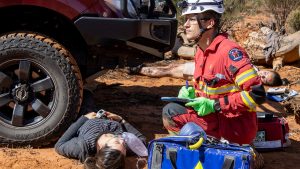
Image: MERC Kalgoorlie, May 2021, First Aid Scenario with volunteer role player, moulage and competing team in action with adjudicator. Source: Remote Digital Imagery
Just three short years ago, Victoria Putter had no experience as part of an emergency response team – now she’s captain of the St Ives team that proudly competed at the Goldfields Surface Mine Rescue Competition earlier this year.
Putter says the physical training involved is “blood, sweat and tears” for two weeks leading into every competition. “Without these comps, you don’t get that full-blown practice in a realistic scenario,” Putter said.
“My favourite thing is the actual scenarios themselves and the rush of the adrenaline when you walk in and someone is screaming and needing help.
“I just can’t get over that feeling, especially with the scenarios on the first day of competition. They are insane and feel really realistic.”
While these events promote healthy competition, and bragging rights are always up for grabs, it’s about sharing of knowledge in areas of expertise and embracing the opportunity to learn new skills from other mine rescue or industry experts.
The competition doesn’t just prepare miners and mine sites, but it extends to other workers from other industries – such as the volunteer ambulance workers and other emergency agencies that are engaged for the event. A huge range of emergency services and passionate volunteers are needed to make these events happen, and it creates a positive environment of learning, sharing and continuous improvement.
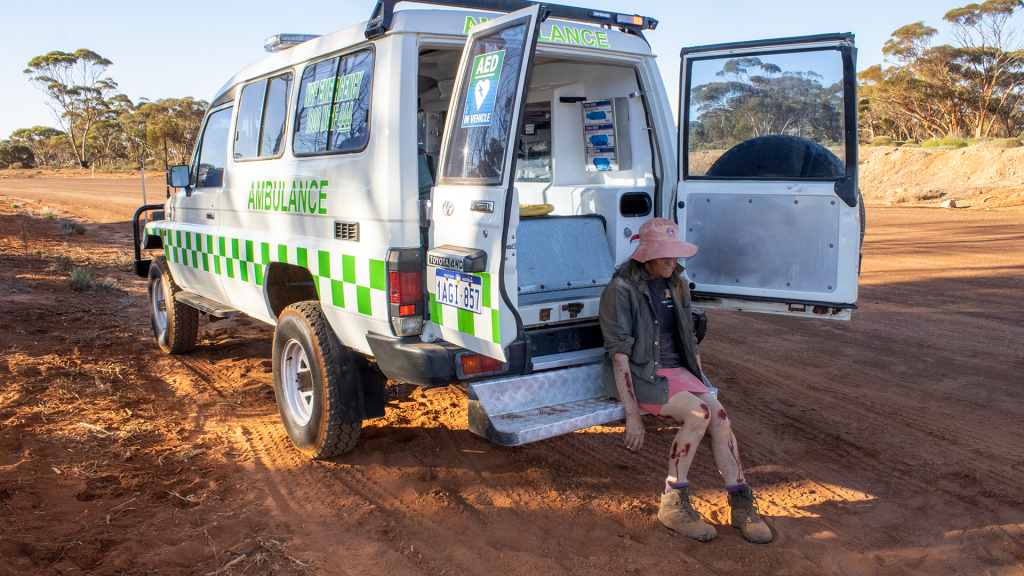
Image: MERC Kalgoorlie, May 2021, First Aid Scenario with volunteer role player, moulage and mine site emergency vehicle. Source: TraumaSim Group
TraumaSim Group has proudly been supporting emergency response training and mine rescue competitions within Australia for several years and believe that this style of training and systems testing could be adopted across a range of workplaces and industries.
“Having the confidence to deal with an emergency situation makes a huge impact” says Nola Pearce, Founder & Director of TraumaSim Group, who began her career as a nurse and said the move to first aid and then simulation training was sparked by a passion for realism.
Nola says it is vital to appoint and train competent people to be responsible in emergency situations. With a hands-on training environment through single or multiple casualty scenarios, workplaces and their employees will benefit greatly from practicing emergencies within a realistic simulation which lessens the shock and trauma of a real-life event, enabling the responder to perform competently when required.
“There is a big difference from classroom training to actually practising skill in the moment and I am passionate about preparing people for that moment in their life. We have seen soldiers in the military faint at the sight of blood. People will never know how they will react to something unless they practise”.
“We have vast experience in providing trauma and emergency simulation services and solutions for the Australian Army and now provide these services to mining and other high-risk workplaces around the world.”
Image: an Amputee Role Player engaged in military mass casualty exercise for pre-deployment and preparedness training exercise. Source: TraumaSim Group
TraumaSim takes pride in being a global leader of trauma simulators and bleeding control innovation and uses its involvement in these events to understand what clients need and how we can help them to achieve a safer working environment for their employees.
This year’s Underground Mine Emergency Rescue Competition (UMERC) is scheduled for 5-7 November 2021 and will be hosted by Evolution Mining at their Hornet Mine Site in Kalgoorlie-Boulder, WA.
The Surface Mine Emergency Rescue Competition (SMERC) will be held 25-28 November at Langley Park, Perth
WA, and with the first all female team competing, we can’t wait to watch them in action!
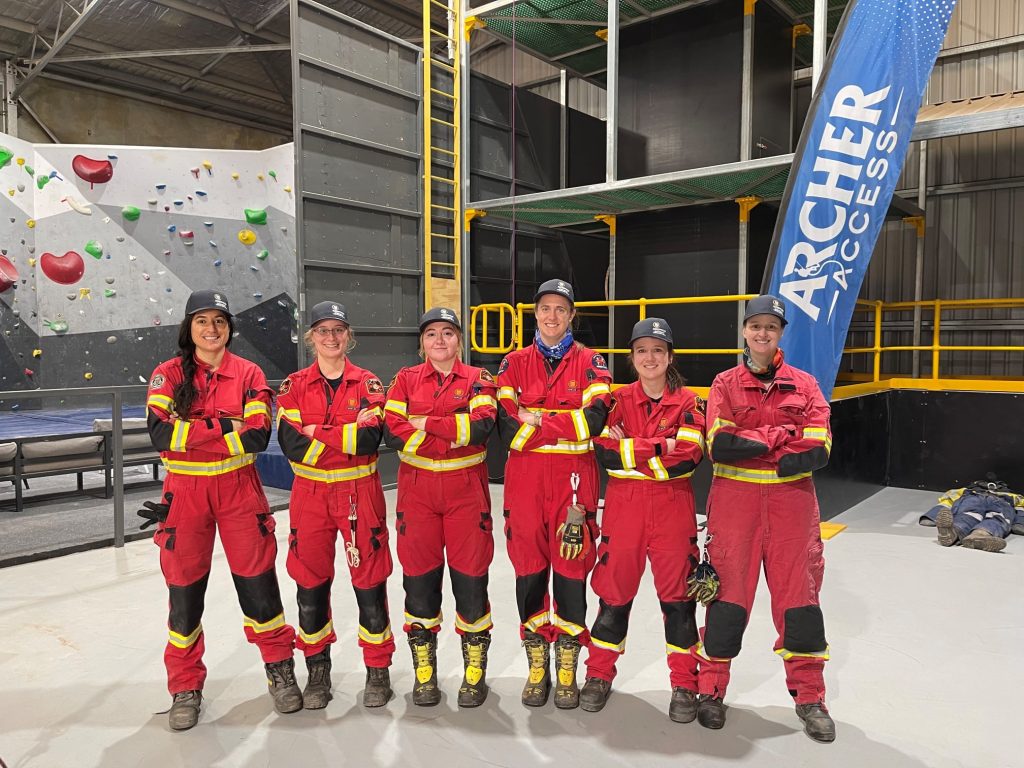
Image: first all girls team representing Goldfields Combined. Left to right: Stacey Thompson (Granny Smith), Victoria Putter (St Ives), Kiara Fischer (St Ives), Tayla Parnham (Agnew), Chloe Hicks (St Ives), Mattie King (Agnew), (absent) Rebecca Tupling (Gruyere). Source: Facebook, Mine Rescue Competition [group]
Story images with thanks to Remote Digital Imagery & TraumaSim Group.
Burn injuries are dynamic, complex and time-sensitive. Yet for years, many training tools have presented them as static wounds, limiting a responder’s ability to recognise deterioration, anticipate complications and manage care over time.
Burn Injury Training | Clinical Simulation | Emergency Response Why TraumaSim Developed a New Progressive Burns Range Through Innovation and Clinical Partnership By Belinda Rennie | Operations Manager, TraumaSim First published in the Asia Pacific Fire magazine, part of the MDM Fire Publishing Group, www.mdmpublishing.com Download the Full Article (PDF) Read the Original Magazine Version […]
Founder’s Feature: Nola Pearce From St John Cadet to the Founder of TraumaSim TraumaSim founder Nola Pearce didn’t begin her journey with a business plan or a product idea. It began decades earlier, with a teenager in Adelaide who wanted to help people and learn how to save lives. That curiosity — sparked in the […]
Haemorrhage Control Training Ukraine: Realism That Saves Lives At TraumaSim, our mission is to equip responders with realistic training tools that save lives. Sometimes, fulfilling this mission takes us beyond our labs and offices into experiences that are challenging, humbling, and deeply rewarding. Our recent work supporting haemorrhage control training in Ukraine is a perfect […]
Healthcare Simulation Week 2025 is here—celebrated globally from September 15–19 under the theme United Through Simulation. This week honors the incredible community of professionals who use simulation to improve the safety, effectiveness, and efficiency of healthcare for all. At TraumaSim, we’re proud to be part of this movement. Our mission is to create hyper-realistic simulation products that empower healthcare professionals […]
As Australian businesses appear to be on a trend path of moving from a singular focus on risk mitigation to incident response, have you tested your people, systems and processes?
Discussions with some major organisations and companies involved in this trend indicate that there is genuine concern at Board level about the ability of the organisation to effectively respond in the event or an onsite incident.
So, boards and senior executives have directed that their organisations actually test their incident response both to provide confidence but also to assist in a reasonable steps defence should it be needed.
Over the last few months, we have been involved in numerous large-scale testing of onsite incident responses exercises by clients. We have distilled a list of the types of testing conducted and for you to consider applying in your own circumstances.
Real Time Multi Agency Responses
These are the big exercises and whilst they cannot be conducted by everyone, they can be scaled down as appropriate and still be effective.
These are used to test incident response to accidents at Airports, Railways and major Industrial sites. The scenario’s involved Police, Fire, Ambulance plus on-site safety teams. In some cases, even mock media teams are engaged as well as mock family members calling the company distressed and wanting to know what’s going on, all of which add a further dimension of realism and tension.
Just recently, we have been involved in various activities supporting training exercises for Rail, Airports, and an Oil & Gas Plant – all for a number of large pro-active organisations that are serious about safety and saving lives.
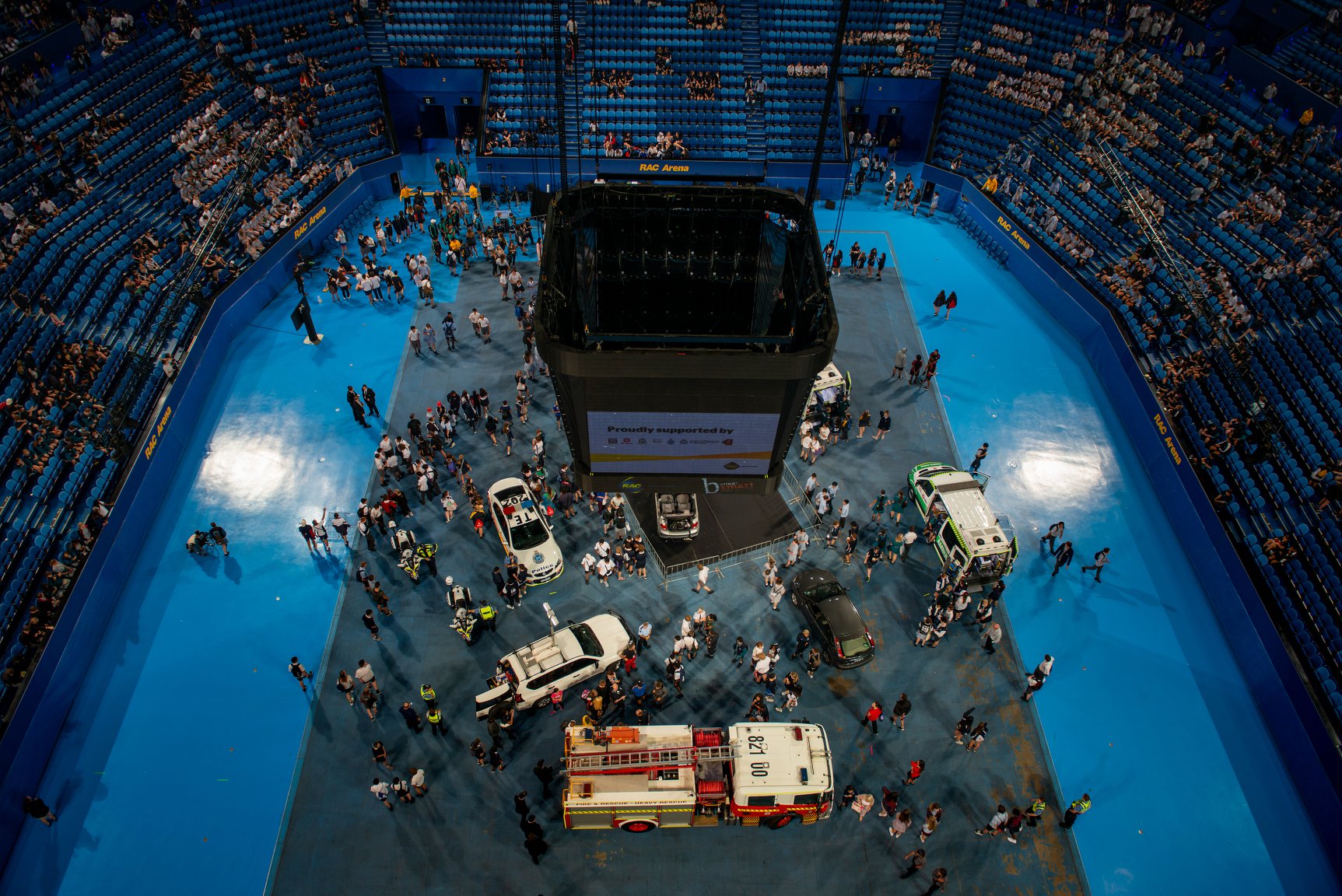
TraumaSim have also been supporting the annual RAC bStreetSmart campaign. The event is run with the help of WA Police, Department of Fire and Emergency Services, Royal Perth Hospital, St John Ambulance and the Theatrical Response Group. The event is for year 10 to 12 students and features a crash scene re-enactment attended by the emergency services, just as it would occur at a real crash site. The students also have the opportunity to listen to speakers who have been directly impacted by road trauma and talk with emergency services personnel.
Image: 2021 RAC bstreetsmart event at Perth Convention Centre, involving all Emergency Services
Rescue Team Competitions
Many mining operations have emergency response teams to respond to incidents that pose a threat to lives and assets. Due the remoteness of some operators, these highly skilled emergency response teams may also be asked to assist in nearby emergency situations at other mine sites or within their local community.
For the competition, hyper-realistic scenarios are setup to test participants skills and competence in firefighting, hazchem response, first aid, team skills, vehicle extrication, rope rescue, incident management, confined space rescue and a theory exam.
Utilising a variety of simulation solutions including role players, medically accurate wounds and injuries (moulage), fire, smoke, sounds and smells, an unforgettable learning experience is created that immerses trainees into a real-world situation and tests their response under the high-stress environment of a true incident or emergency.
Image: 2021 Underground Mine Rescue Competition hosted by Evolution Mining, Kalgoorlie WA, Courtesy of Kalgoorlie Miner Newspaper.
These types of competitions are also an invaluable opportunity to not only demonstrate competency, but identify potential gaps in training, knowledge, business procedures and system processes. The hands-on experience is supported with feedback from a team of adjudicators, who assess the every move of competitors. They provide the teams with real-time feedback plus a written report after the competition, allowing participants to see what they do well and how they can improve.
Injury and Trauma Simulation
Regardless of the size of the exercise, we work with clients to create a realistic emergency trauma simulation that is relevant to the workplace hazards and risks. From a small First Aid Class to a large scale mass casualty exercise, we work with your Safety and/or First Aid Officers to determine the type of injuries that would be expected and how to create the realistic scenario including, but not limited to, the following:
Define the type of wounds and injuries;
Provide a casualty list with briefing on wounds, injuries and symptoms;
Provision of Role Players for casualties; or
Mentoring of Role Players for direction on realistic symptoms for acting;
Design of custom-made wounds (if required);
Application of medical accurate moulage to create casualties;
Equipment and prosthetics to create the scenario (crying baby, odours etc)
and much more!
In these activities, it is critical that the injuries are medically accurate and treatable. First Aid Trainers and leading organisations as above are seeking realistic and treatable wounds and injuries to ensure their people are exposed to real-world situations and learn how to respond effectively.
Our moulage is built on the backbone of healthcare, nursing and first aid training to reflect clinical accuracy and medical realism over Film & Theatrics.
Lessons Learnt
This style of training has been linked to research on the reduction of Post Traumatic Stress Disorder (PTSD) amongst medics and first responders as the exposure builds resilience and enables the repetitive practice of critical skills to create muscle memory, competence and confidence.
As mentioned above, these exercises – whether big or small – identify gaps in training, knowledge, business procedures and system processes. It allows both businesses and personnel to test their response and recognise areas of continuous improvement.
Too many times we’ve heard stories of Medics and First Responders fainting on scene at the site of blood, and even fake blood! So don’t let this happen to you, your team or your organisation.
How You Can Do it Yourself
Moulage courses
The highly experienced TraumaSim team have been delivering moulage services and workshops to a variety of military, medical and emergency response personnel around the world since 2008.
Having trained internationally in Advanced Moulage and Disaster Exercise Design in the United States, we are confident our skills and abilities are leading the industry globally, resulting in only the most advanced knowledge, techniques, materials and tools being applied in our services and training workshops.
Our moulage services can be engaged to apply medically accurate wounds and injuries to your own manikins or role players, creating a realistic scenario to support your training outcomes.
Alternatively, we offer engaging and informative hands-on workshops where we teach you, or your team, to turn a manikin or live role player into a realistic casualty.
The above services and workshops are offered globally with the additional convenience of bringing everything to you! Whether it’s a basic or advanced course, we will work with you to facilitate training onsite at your premises, promising a smooth and efficient training session that meets your required outcomes.
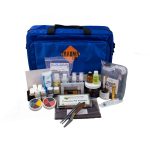
As an authorised Ben Nye distributor, we use only the best moulage tools and materials, and are proud to have developed our very own TraumaSim Casualty FX Moulage Palette – boasting 8 of our favourite colours for the best moulage application!
Check out our range of Kits and consumables here: Moulage
TraumaWear
Liven up your training and really prepare your students for the real world with our TraumaWear range! These medically accurate wearable, robust wounds and injuries provide cost effective, rapid and repeatable application to add realism to your training and simulations.
The forearm range is simply pulled on and set in place. Talc powder can be applied to human skin first to aid with application. The leg and upper leg range are held in place with a strap & clip system. Simply pull on or tighten the straps around arm or leg and add Stage Blood or Fresh Scab as desired.
The items with bleeding capacity will include a plastic syringe connected via tubing which should all be rinsed thoroughly after each use. Bespoke items can be created to meet your specific requirements.
For more information on this range, please click here: TraumaWear
Burn injuries are dynamic, complex and time-sensitive. Yet for years, many training tools have presented them as static wounds, limiting a responder’s ability to recognise deterioration, anticipate complications and manage care over time.
Burn Injury Training | Clinical Simulation | Emergency Response Why TraumaSim Developed a New Progressive Burns Range Through Innovation and Clinical Partnership By Belinda Rennie | Operations Manager, TraumaSim First published in the Asia Pacific Fire magazine, part of the MDM Fire Publishing Group, www.mdmpublishing.com Download the Full Article (PDF) Read the Original Magazine Version […]
Founder’s Feature: Nola Pearce From St John Cadet to the Founder of TraumaSim TraumaSim founder Nola Pearce didn’t begin her journey with a business plan or a product idea. It began decades earlier, with a teenager in Adelaide who wanted to help people and learn how to save lives. That curiosity — sparked in the […]
Haemorrhage Control Training Ukraine: Realism That Saves Lives At TraumaSim, our mission is to equip responders with realistic training tools that save lives. Sometimes, fulfilling this mission takes us beyond our labs and offices into experiences that are challenging, humbling, and deeply rewarding. Our recent work supporting haemorrhage control training in Ukraine is a perfect […]
Healthcare Simulation Week 2025 is here—celebrated globally from September 15–19 under the theme United Through Simulation. This week honors the incredible community of professionals who use simulation to improve the safety, effectiveness, and efficiency of healthcare for all. At TraumaSim, we’re proud to be part of this movement. Our mission is to create hyper-realistic simulation products that empower healthcare professionals […]
Is sexism preventing women from receiving life saving CPR?
By Belinda Rennie | Operations Manager, TraumaSim
Share this Article:
This Friday, 16th October 2020, is Restart a Heart Day – a global campaign designed to raise awareness and shatter myths around cardiac arrest plus engage the public in CPR and AED training so that everyone can save the life of a bystander, co-worker or family member.
Research has shown that support from the public in the first 3-4minutes is critical and significantly improves the chances of not only surviving the event but making a return to a healthy life.
In addition to shocking survival rates with over 30,000 Australian suffering from cardiac arrest each year and only 1 in 10 surviving, separate US and European studies show that only 39% of women are likely to receive CPR from a bystander – and we need to change both of these statistics.
Researchers suspect bystanders’ are reluctant to touch the chest of woman they don’t know and there is a genuine lack of awareness that women can also suffer from cardiac arrest. The thought of pushing hard and fast on the center of a woman’s chest can be confronting and raises concerns of physical hand placement plus required force.
This is why realism in training and simulation is critical to inform, educate and prepare civilians and bystanders to act and respond in the event of an out-of-hospital cardiac arrest, or any emergency situation.
At TraumaSim Group, we are working hard to change the above and have recently introduced The Manniskin – currently a silicone female skin available in varying pigments with realistic hair, breasts, eyelashes and advanced face detail. This product range enables First Aid trainers to quickly apply a realistic skin over current Little Anne CPR/QCPR manikins and immediately add realism to their training.
Our team is developing this product line to offer both genders in a range of body types, differing ages and with varying faces and ethnic features to better represent the society currently calling Australia home. Acknowledging both diversity and multiculturalism, this innovation is a massive leap forward in the endless quest to improve training simulation and to removing key barriers to saving lives.
TraumaSim Group is a local, Australian owned company that designs and manufactures medically accurate training aids for the global market and are passionate about realism in training.
Check out our proposed solution in our online store: The Manniskin
Burn injuries are dynamic, complex and time-sensitive. Yet for years, many training tools have presented them as static wounds, limiting a responder’s ability to recognise deterioration, anticipate complications and manage care over time.
Burn Injury Training | Clinical Simulation | Emergency Response Why TraumaSim Developed a New Progressive Burns Range Through Innovation and Clinical Partnership By Belinda Rennie | Operations Manager, TraumaSim First published in the Asia Pacific Fire magazine, part of the MDM Fire Publishing Group, www.mdmpublishing.com Download the Full Article (PDF) Read the Original Magazine Version […]
Founder’s Feature: Nola Pearce From St John Cadet to the Founder of TraumaSim TraumaSim founder Nola Pearce didn’t begin her journey with a business plan or a product idea. It began decades earlier, with a teenager in Adelaide who wanted to help people and learn how to save lives. That curiosity — sparked in the […]
Haemorrhage Control Training Ukraine: Realism That Saves Lives At TraumaSim, our mission is to equip responders with realistic training tools that save lives. Sometimes, fulfilling this mission takes us beyond our labs and offices into experiences that are challenging, humbling, and deeply rewarding. Our recent work supporting haemorrhage control training in Ukraine is a perfect […]
Healthcare Simulation Week 2025 is here—celebrated globally from September 15–19 under the theme United Through Simulation. This week honors the incredible community of professionals who use simulation to improve the safety, effectiveness, and efficiency of healthcare for all. At TraumaSim, we’re proud to be part of this movement. Our mission is to create hyper-realistic simulation products that empower healthcare professionals […]
Restart a Heart Day 2020 : Let us show you how to do CPR on a woman!
By Belinda Rennie | Operations Manager, TraumaSim
Share this Article:
Did you know that women are less likely to receive CPR from a bystander for fear of injury or litigation ?
Let us show you how easy CPR is in this short video and remember, modesty doesn’t matter when a life is at risk.
WARNING: video contains realistic silicone breasts and please note that breaths have been demonstrated to the side due to COVID-19 regulations. CPR can still be conducted during these times but should you be concerned with or unwilling to provide breaths, these can be withheld as long as compressions are maintained. Doing something is better than doing nothing at all!
Burn injuries are dynamic, complex and time-sensitive. Yet for years, many training tools have presented them as static wounds, limiting a responder’s ability to recognise deterioration, anticipate complications and manage care over time.
Burn Injury Training | Clinical Simulation | Emergency Response Why TraumaSim Developed a New Progressive Burns Range Through Innovation and Clinical Partnership By Belinda Rennie | Operations Manager, TraumaSim First published in the Asia Pacific Fire magazine, part of the MDM Fire Publishing Group, www.mdmpublishing.com Download the Full Article (PDF) Read the Original Magazine Version […]
Founder’s Feature: Nola Pearce From St John Cadet to the Founder of TraumaSim TraumaSim founder Nola Pearce didn’t begin her journey with a business plan or a product idea. It began decades earlier, with a teenager in Adelaide who wanted to help people and learn how to save lives. That curiosity — sparked in the […]
Haemorrhage Control Training Ukraine: Realism That Saves Lives At TraumaSim, our mission is to equip responders with realistic training tools that save lives. Sometimes, fulfilling this mission takes us beyond our labs and offices into experiences that are challenging, humbling, and deeply rewarding. Our recent work supporting haemorrhage control training in Ukraine is a perfect […]
Healthcare Simulation Week 2025 is here—celebrated globally from September 15–19 under the theme United Through Simulation. This week honors the incredible community of professionals who use simulation to improve the safety, effectiveness, and efficiency of healthcare for all. At TraumaSim, we’re proud to be part of this movement. Our mission is to create hyper-realistic simulation products that empower healthcare professionals […]
Is it time to upskill our nation and make every Australian a first responder?
By Belinda Rennie | Operations Manager, TraumaSim
Share this Article:
If your mate was bitten by a shark, would you know how to help until emergency services arrived?
Sadly, many Australians die from severe blood loss relating to trauma related injuries. Given how adventurous we are but how remote our location is, we’re asking – should all Australians learn how to use a tourniquet and haemostatic dressing?
Should someone you know suffer from an injury that is causing severe blood loss, and the haemorrhaging isn’t stopped, the casualty can bleed to death in just five minutes. However, St John WA’s promise to you is that they will arrive within 15 minutes during a life-threatening emergency in the metropolitan area or a maximum of 60 minutes in less urgent situations. And their current response times for attending to a priority 1 (emergency) call within 15minutes is met 90% of the time.
In 2000, the World Health Organisation (WHO) reported that worldwide, severe trauma results in the death of over 5 million persons annually and is projected to surpass 8 million annually by the year 2020. At that time, haemorrhage accounted for approximately 35% of the mortality from these traumatic injuries, and up to half of the deaths resulting from haemorrhage occur before reaching emergency care.
Given we are in Australia and have the dangers and risks associated with our great southern land, is it time to upskill our nation and make every Australian a first responder?
This year, more Australians have been killed in unprovoked shark attacks since 1934 and according to the Australian Shark Attack File, it has been 86 years since 6 people last died from unprovoked shark bites in a single year. In the video linked above, Rick Gerring lost his brother Ben to a shark attack and wishes he had known about bleeding control and tourniquet application as it may have just saved his life.
Whilst statistics show that road deaths in Australia decline each year, we have still had 1,107 deaths in the past 12 months. And due to the vast uninhabited areas linked by kilometres of highway across Australia that we travel along, an increasing number of truck drivers are finding themselves acting as accidental first responders, stumbling upon serious crashes in remote locations – often waiting 2 to 3 hours before paramedics arrive.
The above has identified that the more civilian bystanders who are trained in managing massive haemorrhage control using tourniquet application and haemostatic dressing, the more Australian lives can be saved.
In support of this, various initiatives as Stop The Bleed® which aims to teach ordinary people how to keep trauma victims alive whist waiting for emergency personnel and the collaboration between the Northern Territory Road Transport Association and Western Roads Federation to develop a program around “Industry Response to truck drivers as first responders in remote and regional Australia” are greatly assisting to fill this gap. But can we do more?
At TraumaSim, we’re passionate about realism in training as we know it improves student retention and prepares them for responding in real life situations and hence, we’re just as passionate about training itself.
As quoted from the video, Denise Dagley says “The only thing more tragic than someone bleeding to death, is if you could have prevented it”
If you’re a business looking to upskill your First Aid Officer(s) or a civilian looking to arm yourself with the skills & knowledge to save the life of a friend or family member, please refer to our training partners around Australia that may be able to assist you: Training Partners
If you’re a First Aid Trainer looking to take your course to the next level, check out our range of task trainers that focus on haemorrhage control, haemostatic dressing and tourniquet training: Part Task Trainers
Burn injuries are dynamic, complex and time-sensitive. Yet for years, many training tools have presented them as static wounds, limiting a responder’s ability to recognise deterioration, anticipate complications and manage care over time.
Burn Injury Training | Clinical Simulation | Emergency Response Why TraumaSim Developed a New Progressive Burns Range Through Innovation and Clinical Partnership By Belinda Rennie | Operations Manager, TraumaSim First published in the Asia Pacific Fire magazine, part of the MDM Fire Publishing Group, www.mdmpublishing.com Download the Full Article (PDF) Read the Original Magazine Version […]
Founder’s Feature: Nola Pearce From St John Cadet to the Founder of TraumaSim TraumaSim founder Nola Pearce didn’t begin her journey with a business plan or a product idea. It began decades earlier, with a teenager in Adelaide who wanted to help people and learn how to save lives. That curiosity — sparked in the […]
Haemorrhage Control Training Ukraine: Realism That Saves Lives At TraumaSim, our mission is to equip responders with realistic training tools that save lives. Sometimes, fulfilling this mission takes us beyond our labs and offices into experiences that are challenging, humbling, and deeply rewarding. Our recent work supporting haemorrhage control training in Ukraine is a perfect […]
Healthcare Simulation Week 2025 is here—celebrated globally from September 15–19 under the theme United Through Simulation. This week honors the incredible community of professionals who use simulation to improve the safety, effectiveness, and efficiency of healthcare for all. At TraumaSim, we’re proud to be part of this movement. Our mission is to create hyper-realistic simulation products that empower healthcare professionals […]
Why fear of complacency is changing first aid training and response drills?
By Belinda Rennie | Operations Manager, TraumaSim
Share this Article:
Over the last 10 years there has been a discernible change in the way that companies are approaching first aid training and emergency response testing.
Mining, Oil & Gas, Agri-Business, Rail, Air and Road transport companies have begun to demand simulated realism in their first aid training and response testing to ensure their responses are actually effective. In some cases fear of legal liability is driving the change.
Traditionally such companies had relied on simply having staff trained to a national first aid standard to meet their legal obligations. Such training is usually conducted in an inert environment where students are sheltered from the visual reality of the wounds or injuries they are being trained to treat. However, students if successful receive a first aid certificate, which may mean the company that employs them has met their legal workplace requirement for a trained first aider. But what is not known by the company or their staff that may have to rely on them when the time comes is whether or not the student can actually cope in a real situation?
Similarly, legal requirements to conduct on-site safety response training are usually just a drill. Generally, a great time for social catch ups as people go through the motions of the drill response. But would people act as per the drill if and when they were actually required to do so?
Many companies seem to have been asking the same questions as there has been a noticeable trend change towards more realistic first aid training and event testing simulations. The causes of these trend changes are varied and range from:
Fears of complacency regarding site safety and practices;
Remoteness of operations;
The increased presence of ex-military who were trained to a higher standard of simulated realism;
Emerging research that simulated realism can reduce post event mental health risks;
The growing perceived legal risk to Directors.
Making Simulations Affordable
For over a decade TraumaSim has been providing services to the military, paramedic and emergency services in high end simulated injuries and trauma. However such services were often out of the price range or budget of some companies.
Therefore, TraumaSim spent two years researching and developing pre-made, rapid application yet realistic common wounds or injuries that Company OSH staff or Training companies could use themselves.
These reusable wound simulations can enable staff or trainers the flexibility to develop and conduct their own realistic training or events. The product range is growing, the details of all of them and our other services can be found on our website.
These are incredibly easy to use, to see how watch the short video on our LinkedIn TraumaSim page, which also shows some scenario examples.
Liked in many other sectors of training, there is a definite trend away from tick and flick training to demanding that people are actually competent to perform at the required level when needed.
Burn injuries are dynamic, complex and time-sensitive. Yet for years, many training tools have presented them as static wounds, limiting a responder’s ability to recognise deterioration, anticipate complications and manage care over time.
Burn Injury Training | Clinical Simulation | Emergency Response Why TraumaSim Developed a New Progressive Burns Range Through Innovation and Clinical Partnership By Belinda Rennie | Operations Manager, TraumaSim First published in the Asia Pacific Fire magazine, part of the MDM Fire Publishing Group, www.mdmpublishing.com Download the Full Article (PDF) Read the Original Magazine Version […]
Founder’s Feature: Nola Pearce From St John Cadet to the Founder of TraumaSim TraumaSim founder Nola Pearce didn’t begin her journey with a business plan or a product idea. It began decades earlier, with a teenager in Adelaide who wanted to help people and learn how to save lives. That curiosity — sparked in the […]
Haemorrhage Control Training Ukraine: Realism That Saves Lives At TraumaSim, our mission is to equip responders with realistic training tools that save lives. Sometimes, fulfilling this mission takes us beyond our labs and offices into experiences that are challenging, humbling, and deeply rewarding. Our recent work supporting haemorrhage control training in Ukraine is a perfect […]
Healthcare Simulation Week 2025 is here—celebrated globally from September 15–19 under the theme United Through Simulation. This week honors the incredible community of professionals who use simulation to improve the safety, effectiveness, and efficiency of healthcare for all. At TraumaSim, we’re proud to be part of this movement. Our mission is to create hyper-realistic simulation products that empower healthcare professionals […]
MOULAGE : do home recipes belong in the workplace?
By Belinda Rennie | Operations Manager, TraumaSim
Share this Article:
Do you use Moulage in your workplace or for clients? And have you ever wondered what your risks and liabilities were? Does yours or the client’s insurance cover any mishaps or adverse reactions?
We cover a few points below to help you assess your risk and prevent any legal backlash from doing the thing that you love!
Moulage – a little bit of history
Moulage is the French word for moulding or casting and dates back to the 16 th century when wax models were used in the study of human anatomy. It started as the art of applying mock injuries for educational purposes and continues today, often used in nursing, emergency response training and preparedness exercises to simulate wounds and injuries likely to be seen when attending to casualties.
“The application of moulage in a scenario dramatically increases the realism required to overcome the initial shock factor when responding to a real-life emergency situation” says Nola Pearce, our in-house Moulage Specialist at TraumaSim Group.
In early moulage times, clinical educators used a variety of home-made recipes from everyday foods in the cupboard like oatmeal, coffee grounds, chocolate syrup, pasta and more, used to create many injuries that they needed to portray.
Moulage products have evolved from the film and TV special effects world dating back to the 1940’s. Simple greasepaint makeups and latex prosthetics were common place. Over time, while products have improved for Film and TV use, the moulage world has cherry picked useful products that not only look realistic on camera but respond well to medical assessment and treatment.
Choosing the right Moulage products
Silicone vs Latex
Currently, the primary materials used as a basis for 3D moulage for the creation of wounds and injuries is latex or silicone. Both products are polymers known as “elastomer” and can appear quite similar. Whilst both are rubber products, they are chemically very different from each other and have differing properties and price.
If you find yourself presented with the option between the two, it is highly recommended that you evaluate the attributes of latex vs. silicone to decide which one is right for you!
One of the most important characteristics of any material used in medical application has to do with its biocompatibility, which is the products ability to perform its intended function without causing undesirable side effects.
At TraumaSim, our preference is for the use of silicone as the allergy rate of latex amongst people is significantly higher. Research indicates that between one and six percent of people are allergic to latex but with so much product utilised in the healthcare industry, this increases to 10% amongst health professionals.
Symptoms of latex allergy vary from itchy rashes to potentially life-threatening anaphylaxis. Avoidance is the best way to manage this as repeated exposure to latex can escalate the immune system response.
Whilst thought to be extremely rare, a small percent of the population may be allergic to silicone. However, often this reaction is due to other materials used at the time of production. Pure silicone is considered hypoallergenic. It’s important to note that silicone comes in a variety of types as follows:
Medical-Grade Silicone
This is often completely free of allergens, and you’ll find this type of silicone mainly used in the medical profession because it’s the safest type. Items like catheters, facial implants, and baby bottle teets, are all examples of products that will be made out of medical- grade silicone.
Industrial Silicone
This type of silicone is found in products such as accessories and household products. The problem is that it’s not as pure as medical-grade silicone and it doesn’t undergo as much testing, which means that it’s more likely to cause allergies due to contaminants that can be present in it.
At TraumaSim Group, we use medical grade silicone for the manufacture of our entire product range and these are supported by a quality range of purpose made moulage consumables. In 14 years of using silicone on many thousands of roleplayers (simulated patients), we have seen only 2 minor rashes.
Make-up or Home-Made vs Moulage
In addition to removing risks of allergic reactions or any adverse reactions as discussed above when comparing latex and silicone, using purpose made moulage products will give you the desired outcome in the most effective manner. Instead of blending a variety of your own makeup collection with a range of home-made solutions, perhaps using an already pigmented powder specifically developed for the intended purpose will halve your time and possibly cost?
We know these decisions can come down to budget and the ability to stretch money across a range of solutions is very admirable, but does it still come at a cost? And is it really saving you money? Remember, your time also has a cost. And will the money saved be enough to cover any insurance or legality claims in the event of an adverse reaction?
As the use of moulage in simulation has grown, so has the availability of a range of brands and products around the globe have been developed specifically for this application. Initially starting in the Film & Theatre world, the need for medically accurate wounds and injuries that represent real-world trauma is preferred over fancy special effects and Halloween horror type makeup.
Professional grade moulage products have been manufactured under laboratory conditions and have been tested to ensure they are safe for their intended purpose but also represent in the most realistic manner. An enormous amount of research and development has gone into producing realistic paints, powders and simulated bloods to assist customers in achieving the most effective moulage attainable.
At TraumaSim Group we’re a proud Ben Nye distributor and highly recommend their professional products for the most amazing results.
As a professional organisation leading the industry in moulage application and solutions, TraumaSim Group are passionate about realism and always deliver high standard products and services, ensuring the customer receives the desired outcome without issue or further adversity post-event.
This is done by ensuring the right people have the right tools to do their job to the best of their ability!
Risk & Liability
As a Moulage Technician, you may be required to work in a variety of situations and customer venues. This can range from a University or Hospital Simulation Centre to out in the field (literally) with a Defence or Emergency Response Team undertaking preparedness training. In all of these situations, Product & Public Liability apply and you are responsible for ensuring the safety of the people you are working with.
Above, we discussed the use of professional grade products in moulage application over home-made recipes to minimise risk of allergic or adverse reactions in-situ. Another benefit to purchasing professional grade products is the availability of Safety Data Sheets – documents that provide critical information about hazardous chemicals and are used by businesses to assess the risks associated with its use in the workplace. A business or client new to moulage products and services may question the products being applied and request copies of such documents. Would you be able to provide this information if asked?
Even though the food products you have bought to cook up a batch of blood are considered safe to use, once you combine them for a purpose different to the manufacturer’s original intent, this increases your risk and liability if there is an adverse reaction. However, in the event of an allergic reaction, if you are able to produce a SDS for the products being used and can show you have taken all diligent steps in preventing the occurrence, this will be in your favour when the incident is being reviewed.
At TraumaSim Group, we keep a folder with an SDS for each product we use in the manufacture of our product range.
It is kept within access of all staff and readily available upon request.
Industrial Manslaughter
With Industrial Manslaughter laws now enacted in every state in Australia, it is wise to consider the worst case scenario when evaluating risk for employees and personnel when providing services and products to clients. It is advisable to ensure the following:
All products used are covered by Product Liability;
Safety Data Sheets (SDS) are available for all chemicals or hazardous products; and
Use only professional grade products designed for their intended purpose.
Now more than ever, workplaces and their team(s) responsible for safety and risk are under the spotlight and must ensure every effort is made to reduce any risks that could be harmful to the workplace and it’s personnel. In the event of an incident, all of the above points will be taken into consideration when investigating a workplace incident or accident to ascertain if the business and its key stakeholders took all reasonable steps to prevent the occurrence.
To ensure you are positioned to protect yourself from any SafeWork or legal claims as a result of an adverse reaction to moulage, we strongly recommend you review your Product and Public Liability insurance coverage and seek guidance on the relevance of the SDS register in your personal situation.
If you’re keen to hear more about these Industrial Manslaughter laws and how they could impact First Aid Training, watch our webinar session with Pragma Law here:
Summary
TraumaSim Group are passionate about realism in training and believe moulage is a high impact value add to any simulation or scenario. We’re aiming for best practise across the industry and around the world, resulting in the application of quality, medically accurate moulage that is professional, consistent and visibly accurate regardless of the simulation, venue or Technician.
The highly experienced TraumaSim team has been delivering moulage services, training and workshops to a variety of personnel around the globe since 2008. We can apply medically accurate wounds and injuries to manikins or live role players in-situ, and we also offer engaging and informative hands-on workshops supported by a vast range of quality moulage consumables.
If you’re looking to elevate your moulage or take it from a hobby to a rewarding professional career-path, we can help! Reach out to the team on 1300 411 080 (int’l +61 8 6109 6658) or via email to [email protected].
Burn injuries are dynamic, complex and time-sensitive. Yet for years, many training tools have presented them as static wounds, limiting a responder’s ability to recognise deterioration, anticipate complications and manage care over time.
Burn Injury Training | Clinical Simulation | Emergency Response Why TraumaSim Developed a New Progressive Burns Range Through Innovation and Clinical Partnership By Belinda Rennie | Operations Manager, TraumaSim First published in the Asia Pacific Fire magazine, part of the MDM Fire Publishing Group, www.mdmpublishing.com Download the Full Article (PDF) Read the Original Magazine Version […]
Founder’s Feature: Nola Pearce From St John Cadet to the Founder of TraumaSim TraumaSim founder Nola Pearce didn’t begin her journey with a business plan or a product idea. It began decades earlier, with a teenager in Adelaide who wanted to help people and learn how to save lives. That curiosity — sparked in the […]
Haemorrhage Control Training Ukraine: Realism That Saves Lives At TraumaSim, our mission is to equip responders with realistic training tools that save lives. Sometimes, fulfilling this mission takes us beyond our labs and offices into experiences that are challenging, humbling, and deeply rewarding. Our recent work supporting haemorrhage control training in Ukraine is a perfect […]
Healthcare Simulation Week 2025 is here—celebrated globally from September 15–19 under the theme United Through Simulation. This week honors the incredible community of professionals who use simulation to improve the safety, effectiveness, and efficiency of healthcare for all. At TraumaSim, we’re proud to be part of this movement. Our mission is to create hyper-realistic simulation products that empower healthcare professionals […]
On 12 August 2020, the Australian Industry and Skills Committee (AISC) endorsed the release of new versions of eight first aid units of competency within the HLT Health Training Package. These updates have been made to reflect industry best practice, expectations and current regulations, and are now available on the National Register www.training.gov.au.
The HLTAID First Aid Competency Standards were developed to provide a set of robust, industry-supported standards for people providing First Aid to others.
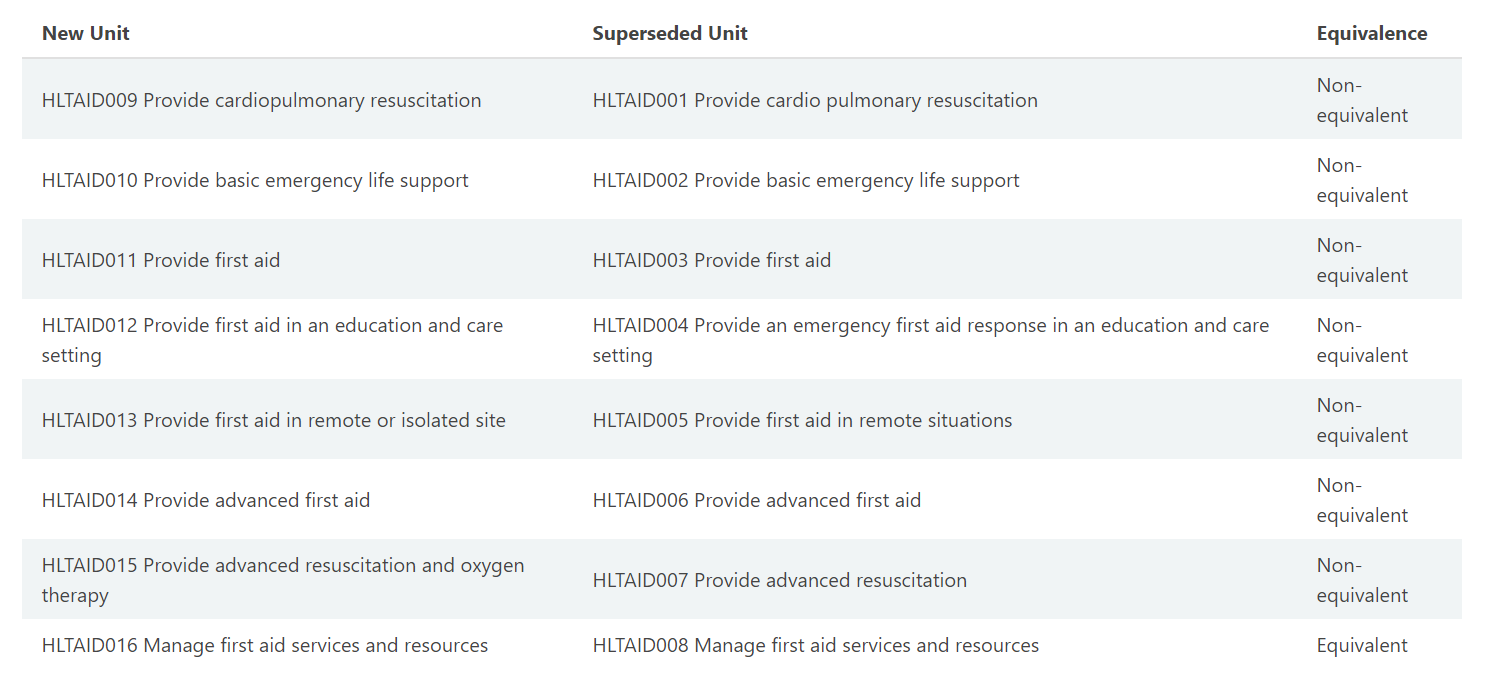
A team of industry professionals and stakeholders reviewed recommendations with the aim to drive improvements in First Aid Training and ensure quality education is being delivered to all Australians. Below is a table from ASQA’s site listing the newly endorsed first aid units of competency.
A significant change to note is the inclusion of teaching tourniquet application and haemostatic dressing via the use of physical training aids when delivering the following units:
HLTAID013 – Provide First Aid in remote or isolated site (previously HLTAID005)
HLTAID014 – Provide Advanced First Aid (previously HLTAID006)
HLTAID015 – Provide advanced resuscitation and oxygen therapy (previously HLTAID007)
What does this mean for you?
If you are a pre-approved RTO, you would have received an invitation with instructions of how to opt-in to apply for the new first aid units. This opportunity closed on 1st November 2020.
Those that were not pre-approved, and all other RTOs, are able to apply to add these units to their scope of delivery and can so via the ASQA asqanet Change of Scope of Registration process. See more information here: https://www.asqa.gov.au/rto/change-scope-registration
Any RTOs that are not regulated by ASQA can, and should, engage with their own regulator regarding registration requirements.
If you choose to opt-in or apply to add these units to your scope delivery, the next step is writing your course curriculum and preparing new material to meet the competency requirements. Then, it’s choosing the right practical training aid!
Simulation and realism in training is growing globally, with a heightened focus on preparing clinical students, first responders and civilians alike to respond effectively in the event of an emergency. Driven by a passion for improving practical skills training within all emergency services and healthcare fields, creative thinkers around the world are developing products to add realism to scenario based training and exercises.
These range from basic CPR manikins to high-fidelity units with technological feedback and app integration, to medically accurate silicone prosthetics that mimic bleeding – all used to simulate almost any wounds, injuries or medical procedures you can think of! And scrolling your way through pages and pages of irrelevant or over budget products can leave you all Google’d out.
When looking for the right product to add to your practical training inventory, realism and functionality is extremely important. Be wary of products that are based around the theatrics and special fx of film and seek those that focus on the medical solution being provided, using latex-free silicone to reduce the risk of allergic reactions.
For smaller training organisations and individual trainers, value for money will be critical in assisting them meet these new requirements. Look for repeatable use products that are durable, cleanable (ensuring to meet COVID guidelines) and can be stored for years of ongoing use. And don’t be afraid of shopping locally as Australia is not only leading the industry in the development of these training aids, but priced competitively when compared to international comparisons.
If you’re still unsure and would appreciate some guidance in this area, we’ll be hosting an Information Day in February 2021 to help you navigate through all the available options, for all budget levels, including tips & tricks to easily add realism to your training.
Burn injuries are dynamic, complex and time-sensitive. Yet for years, many training tools have presented them as static wounds, limiting a responder’s ability to recognise deterioration, anticipate complications and manage care over time.
Burn Injury Training | Clinical Simulation | Emergency Response Why TraumaSim Developed a New Progressive Burns Range Through Innovation and Clinical Partnership By Belinda Rennie | Operations Manager, TraumaSim First published in the Asia Pacific Fire magazine, part of the MDM Fire Publishing Group, www.mdmpublishing.com Download the Full Article (PDF) Read the Original Magazine Version […]
Founder’s Feature: Nola Pearce From St John Cadet to the Founder of TraumaSim TraumaSim founder Nola Pearce didn’t begin her journey with a business plan or a product idea. It began decades earlier, with a teenager in Adelaide who wanted to help people and learn how to save lives. That curiosity — sparked in the […]
Haemorrhage Control Training Ukraine: Realism That Saves Lives At TraumaSim, our mission is to equip responders with realistic training tools that save lives. Sometimes, fulfilling this mission takes us beyond our labs and offices into experiences that are challenging, humbling, and deeply rewarding. Our recent work supporting haemorrhage control training in Ukraine is a perfect […]
Healthcare Simulation Week 2025 is here—celebrated globally from September 15–19 under the theme United Through Simulation. This week honors the incredible community of professionals who use simulation to improve the safety, effectiveness, and efficiency of healthcare for all. At TraumaSim, we’re proud to be part of this movement. Our mission is to create hyper-realistic simulation products that empower healthcare professionals […]



 All Products



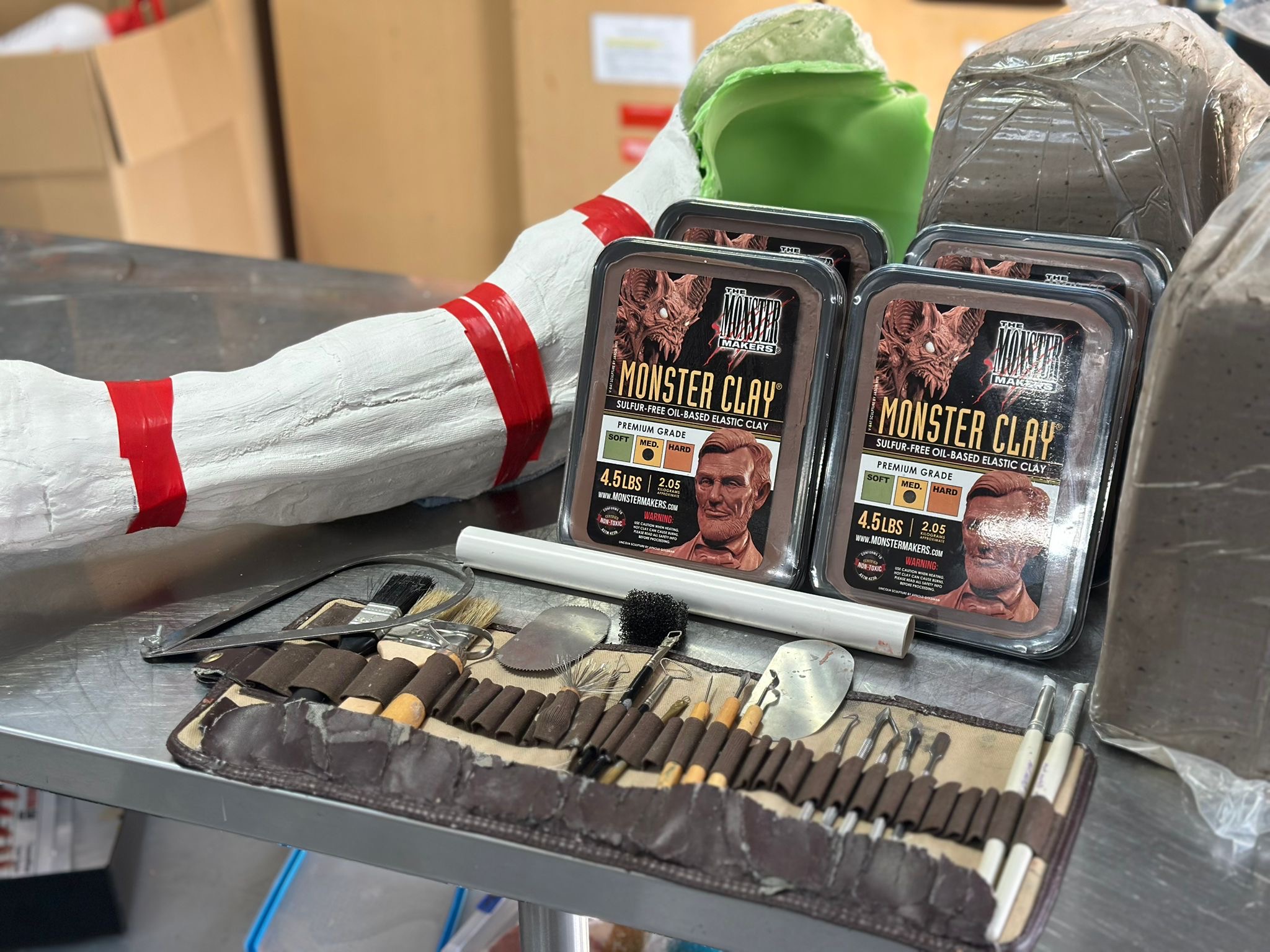


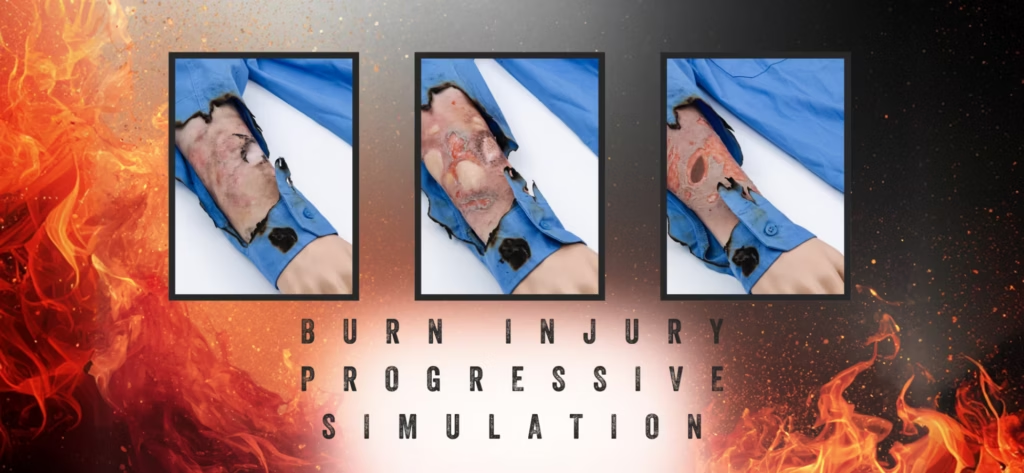
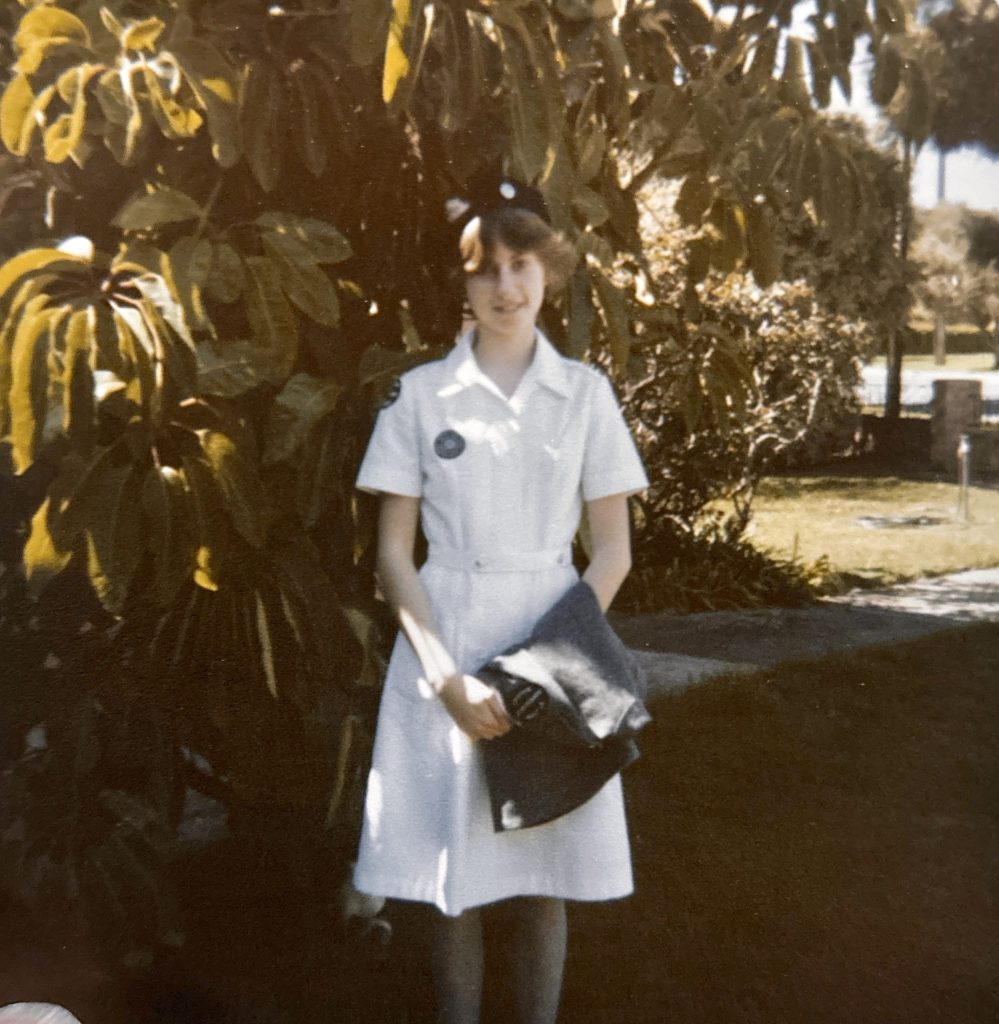
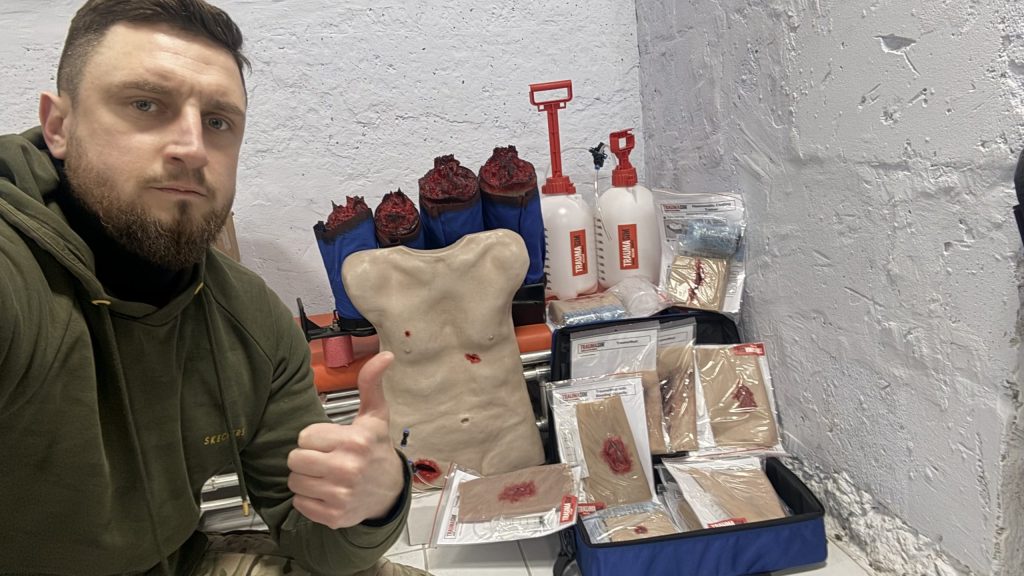
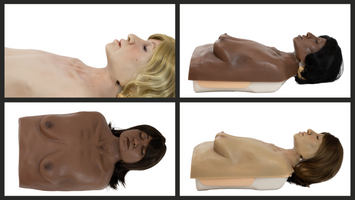
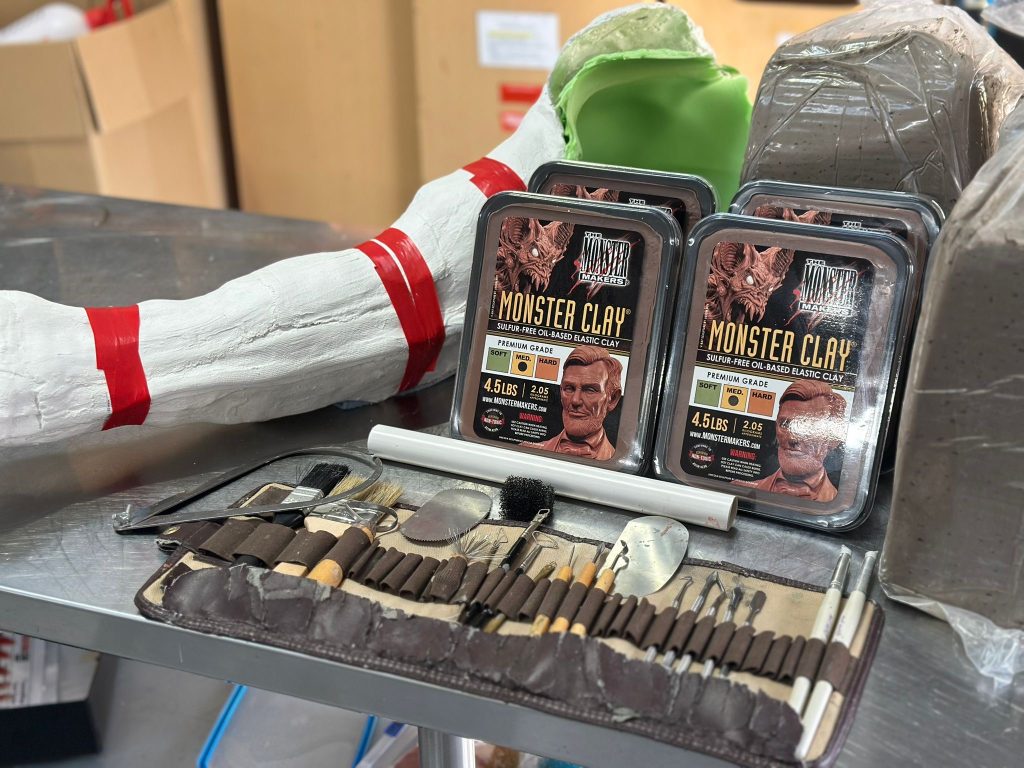
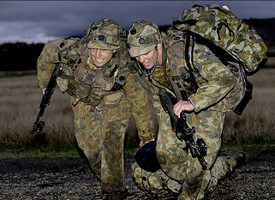


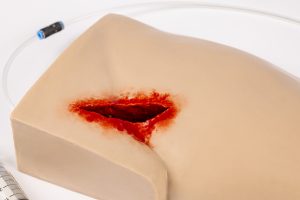
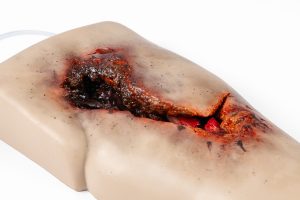
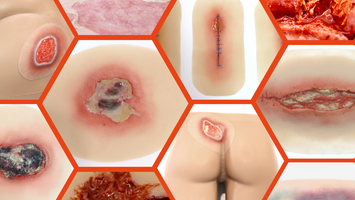
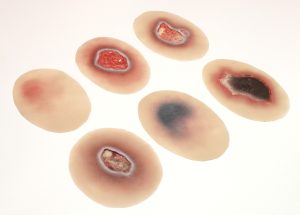
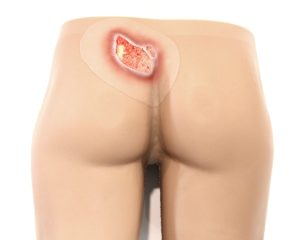
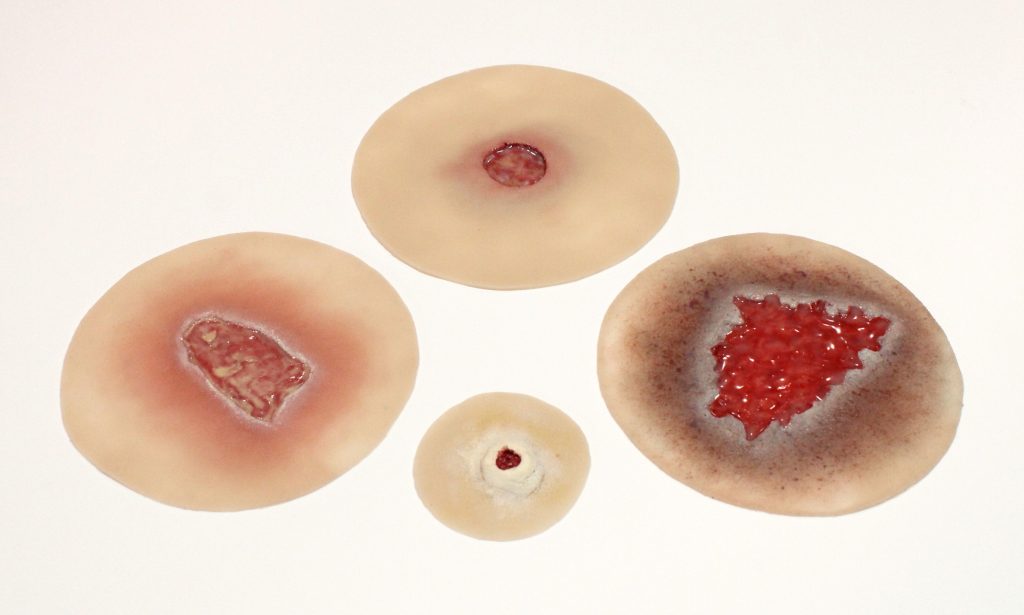
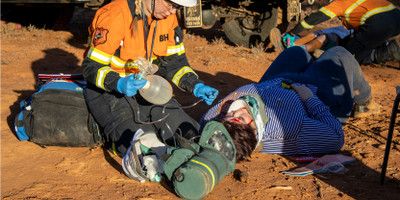
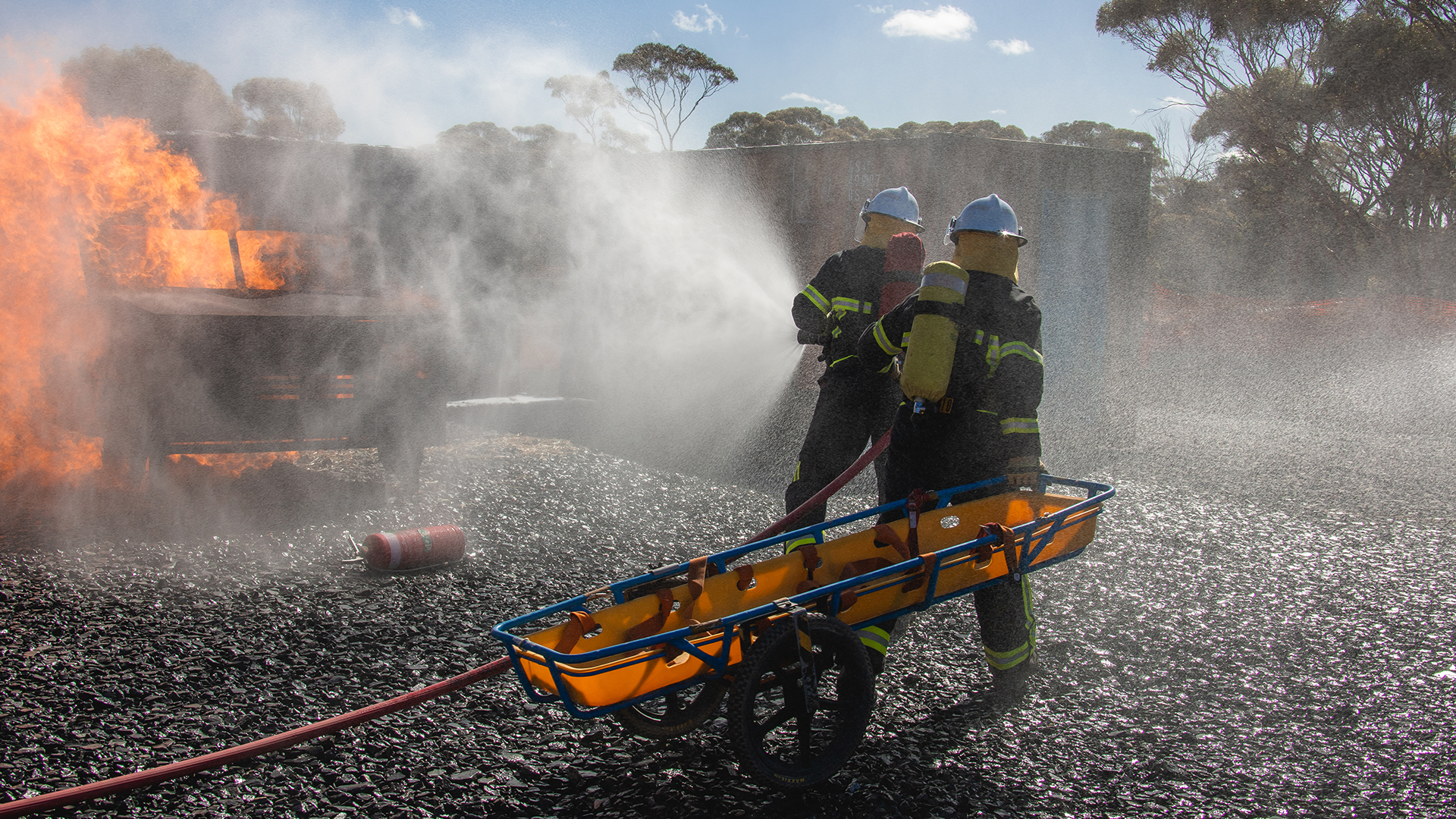

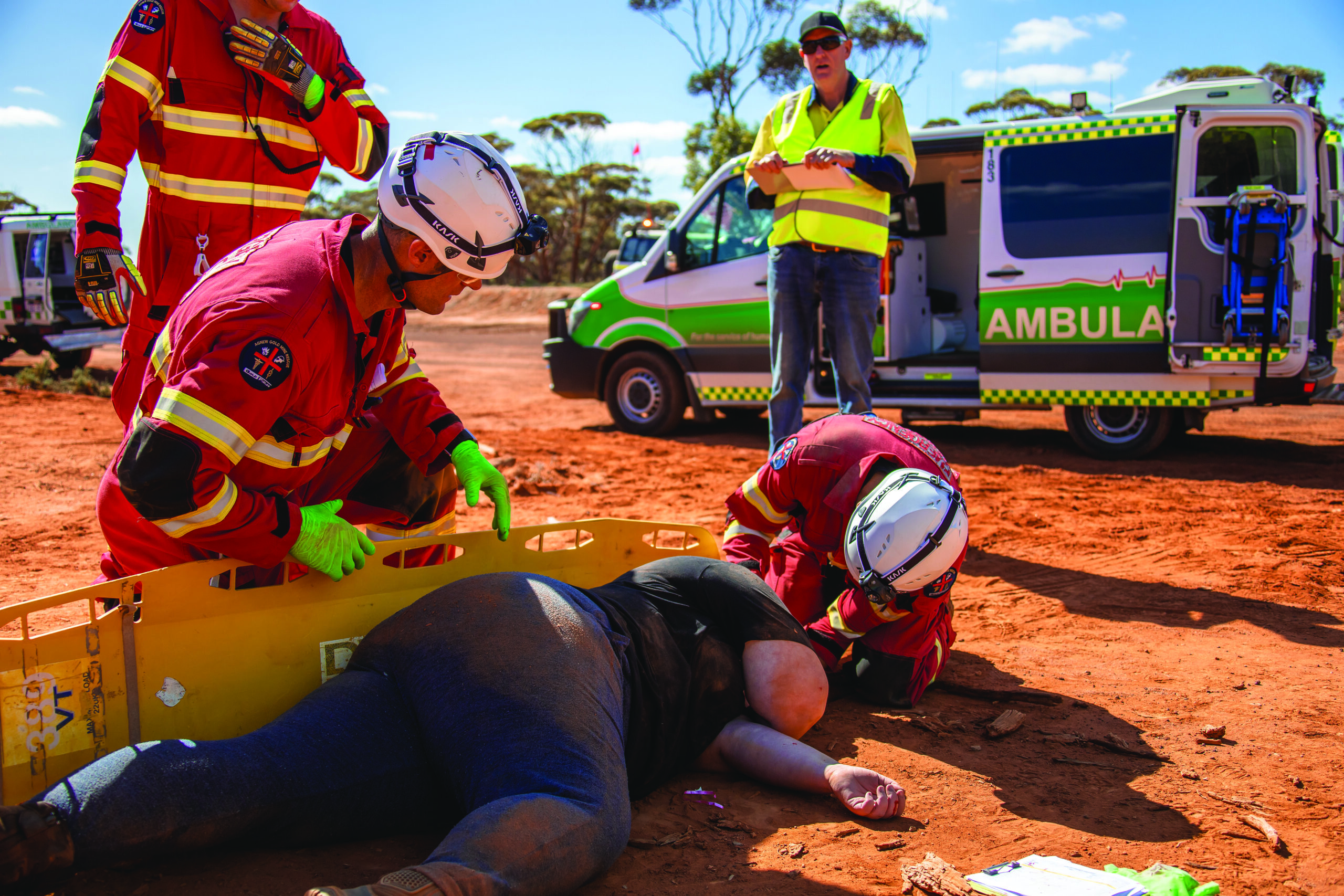 Image: MERC Kalgoorlie, May 2021, First Aid Scenario with volunteer role player, moulage and competing team in action with adjudicator. Source: Remote Digital Imagery